
Do not use a high frequency wand at all if you have a pacemaker or any other implanted electronic device, are pregnant or might be pregnant, have epilepsy or a seizure disorder, have a heart condition, have metal implants or dermal fillers or other injectables in or near the area, or if the skin is broken, irritated, infected or inflamed. Some other situations, including breastfeeding, braces, high or low blood pressure and diagnosed skin conditions, need a doctor’s, dentist’s or dermatologist’s OK before you start.
Safety first: Do not use a high frequency wand if you have a pacemaker or any implanted electronic device, are pregnant, have epilepsy or a heart condition, or on broken, infected or inflamed skin. Keep it away from alcohol-based or flammable products, because the wand can spark. This guide is educational, not medical advice. For ongoing acne, rosacea or other skin concerns, see a board-certified dermatologist.
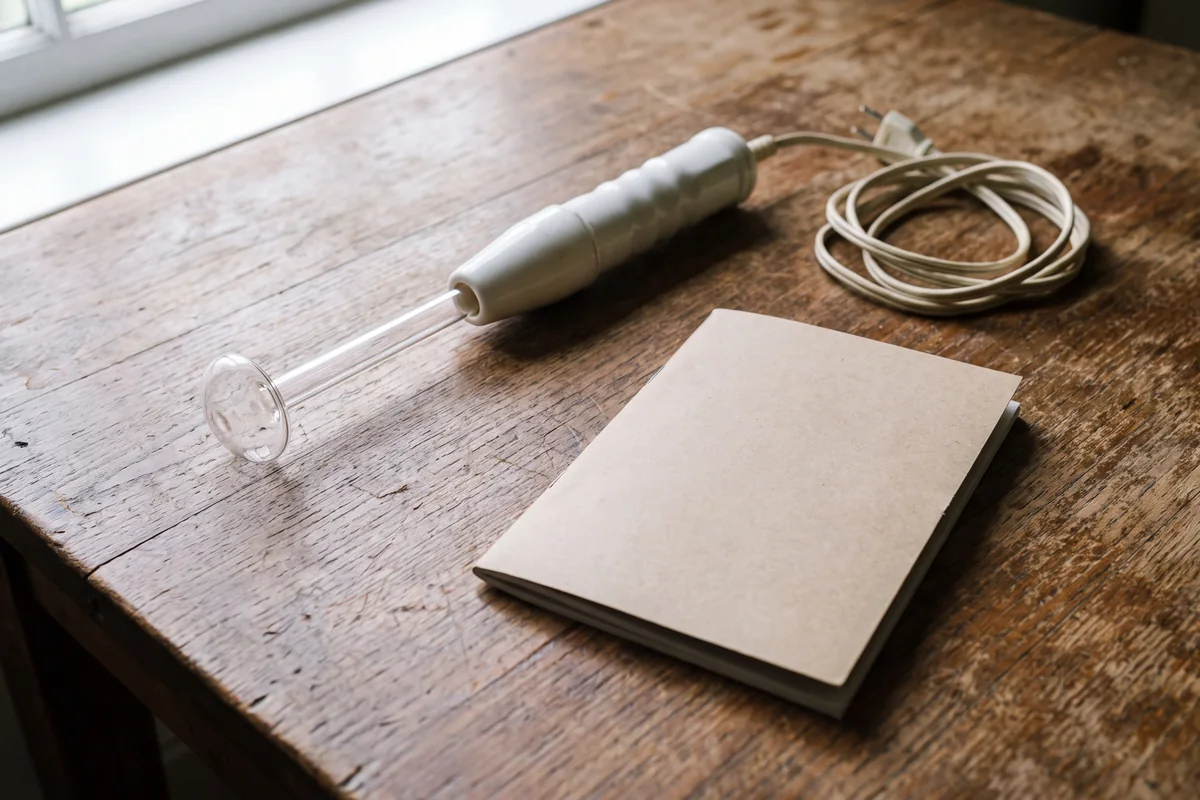
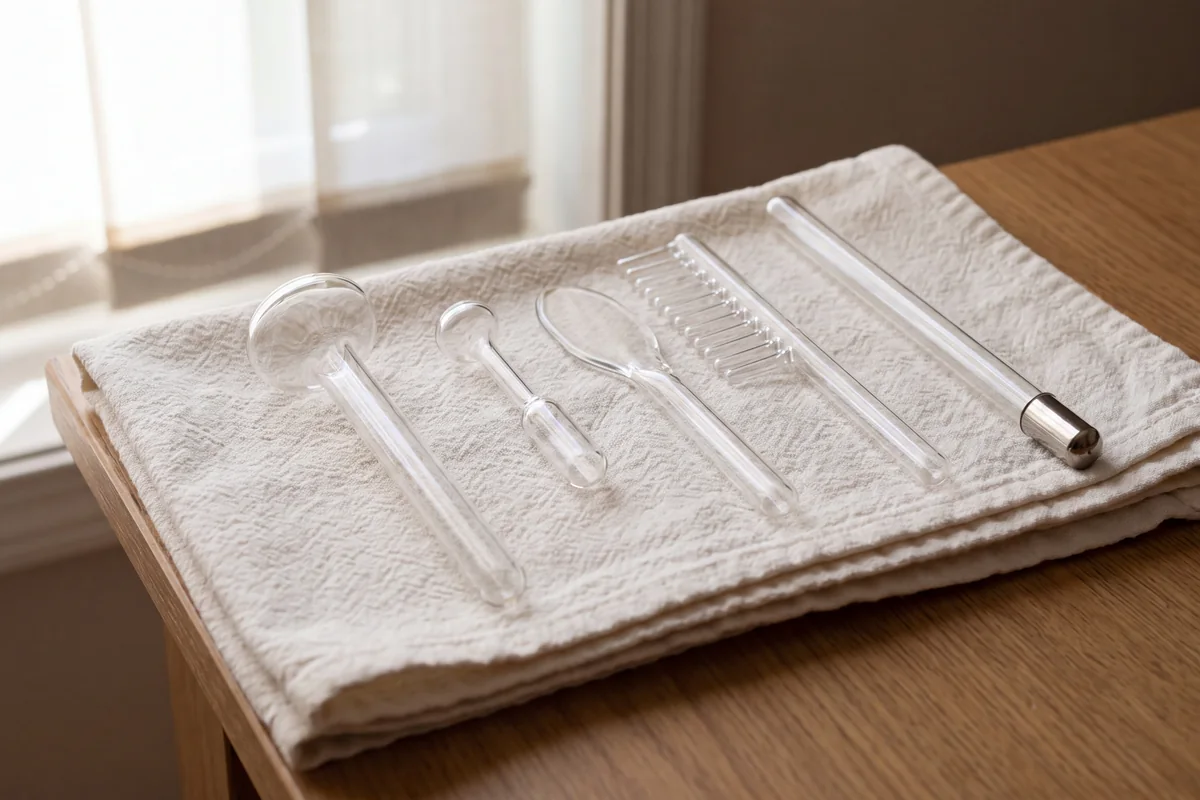
A high frequency wand is a handheld device that sends a high-frequency electrical current through a gas-filled glass electrode, which is the attachment that touches your skin. The rules on this page apply whether your electrodes contain argon (they glow violet) or neon (they glow orange). If you are new to these devices, start with the basics in High Frequency Facial at Home.
This guide draws on the NuDerma high frequency wand user manual, which we cite as a typical example rather than a recommendation, this site’s Medical Disclaimer, which is stricter than that manual in places, and guidance from DermNet and the US Environmental Protection Agency (EPA). Each rule below says which source it comes from, and where the manual and the Medical Disclaimer differ, this guide follows the stricter line. Your own wand’s manual always comes first: read it before your first session, and follow it wherever it is stricter than this page. Once you know a wand is right for you, read how to use a high frequency wand at home.
This guide covers who should avoid a wand or check with a professional first. For the general risks and everyday safe-use habits, read Is a high frequency wand safe to use at home?
Who should never use a high frequency wand?
Do not use a wand if any item in this section applies to you. These are firm rules on this site, even where a manual’s wording is softer. Whoever you are, never use a wand with alcohol-based or flammable products on your skin or close by, because it can spark.
Pacemakers and other implanted electronic devices
Do not use a wand if you have a pacemaker, a neuro-stimulator, an ECG monitor or any other implanted electronic device. The NuDerma manual names these devices as a reason not to use the wand at all, and this site follows the same rule.
Pregnancy, or if you might be pregnant
Do not use a wand if you are pregnant or think you might be. This rule comes straight from that manual.
Epilepsy, seizure disorders and heart conditions
That manual says to consult a physician before use if you have a heart condition, epilepsy or a seizure disorder. This site takes the stricter line and advises not using a high frequency wand at all if any of these apply to you.
Metal implants, dermal fillers and other injectables in or near the area
Do not use a wand on or near an area with metal implants, dermal fillers or other injectables, such as wrinkle-relaxing injections. This rule comes from this site’s Medical Disclaimer, not from that manual.
If you have had Botox or fillers, also ask the clinician who did the injections before using a wand anywhere else on your face. Separately, that manual says to remove metal jewelry before use.
Broken, irritated, infected or inflamed skin
Do not use a wand on skin that is broken, irritated, infected or inflamed. That manual says not to use it on skin with cuts, abrasions, swelling, bruising or infections, or on skin that lacks sensation; this site’s Medical Disclaimer adds irritated and inflamed skin.
That rules out picked or open spots, fresh scratches, rashes, sunburn, numb patches, and any sore, swollen or bruised area. For an active skin infection, see a board-certified dermatologist or your doctor rather than reaching for a device.
Active skin cancer or suspicious spots
That manual says not to use the wand on active skin cancer or suspicious lesions. Any new, changing or unusual spot should be checked by a board-certified dermatologist, and the wand should stay away from it.
Children
That manual says not to use the wand on children. Teens are covered in the extra care section below.
Who should check with a doctor, dentist or dermatologist first?
If any item here applies to you, get a professional’s OK before your first session. Most come from the NuDerma manual; the breathing and “not sure” items are this site’s own advice.
- A body-worn medical device, such as an insulin pump: ask your physician first. That manual lists this as a consult-first situation.
- Breastfeeding: ask your physician first, as that manual advises.
- High or low blood pressure: ask your physician first, as that manual advises.
- Braces or permanent metal retainers: ask your dentist first. That manual says to consult a dental professional.
- Any diagnosed skin condition: ask a board-certified dermatologist first. That manual says to consult a dermatologist, and this site specifies a board-certified one.
If you have rosacea, cystic acne or hair loss, see a board-certified dermatologist before trying a wand. Whether high frequency suits sensitive or rosacea-prone skin is a question for them.
Asthma or another breathing condition
The sharp, fresh smell some users notice during a session is ozone, which the wand produces while it runs. Ozone has antimicrobial properties in lab settings; whether a home wand does this on skin is not well studied. A wand makes only a small amount, but ozone irritates the lungs when inhaled (EPA), so use it in a well-ventilated room, and ask your doctor first if you have asthma or another breathing condition.
If you are not sure
If you are not sure whether any of this applies to you, ask before you use the wand. Show your doctor, dentist or dermatologist the warnings page of your device’s manual.

When does using a wand call for extra care?
Some situations call for more caution, because skin reacts more easily or the person using the wand needs support. These come from this site’s own guidance, DermNet and, for supervision, the NuDerma manual.
Recent peels, retinoids, exfoliating acids and sunburn
Skin that has just had a peel, or that you use a retinoid (such as retinol or tretinoin) or exfoliating acids (such as glycolic or salicylic acid) on, can react more easily. This is this site’s guidance, not a rule from that manual. Let skin settle fully after a peel before using a wand, and if you use a prescription retinoid or strong acids, ask a board-certified dermatologist before adding a wand to your routine.
Sunburned skin counts as inflamed, so it falls under the “do not use” list until the burn has fully cleared.
Darker skin tones
If you have a darker skin tone, irritation from any skin device can leave dark marks behind. DermNet explains that post-inflammatory hyperpigmentation, which is darkening that follows inflammation or injury to the skin, can happen to anyone but is more common in darker skin, where it tends to look more intense and last longer.
A cautious approach to using high frequency on darker skin tones is to patch test a small, less visible area on the lowest setting first, then check that area over the following days. Stop at any lingering redness or darkening, and if you are prone to dark marks, ask a board-certified dermatologist before regular use.
Teens
Teens should only use a wand with a parent’s or guardian’s guidance, and only within the age guidance in their own device’s manual (that manual says not to use the wand on children). For teenage acne, the right first step is a doctor or board-certified dermatologist, not a device bought online.
Reduced physical, sensory or mental capacity
That manual says people with reduced physical, sensory or mental capacities should only use the wand under supervision. This site’s advice is that a responsible adult stays for the whole session and can switch the wand off.
When should you stop and see a dermatologist?
Stop right away, and see a board-certified dermatologist, if a session causes sharp or unusual pain, swelling, blistering, broken skin, extreme redness or darkening, or if you notice a new or changing spot. Switch the wand off and unplug it before you do anything else.
The NuDerma manual also says to stop at any allergic response, swelling, skin discoloration, extreme redness, hyperpigmentation or unusual pain. Do not use the wand on that area again until a dermatologist has looked at it. You can search for a board-certified dermatologist near you with the American Academy of Dermatology’s Find a Dermatologist tool.
FAQ
Can I use a high frequency wand while pregnant?
No. The NuDerma manual says not to use the wand if you are pregnant or might be, and this site follows the same rule.
Can I use a high frequency wand if I have epilepsy or a heart condition?
No. This site advises not using a wand at all if you have epilepsy, a seizure disorder or a heart condition. The NuDerma manual says to consult a physician in these cases, but this site takes the stricter line.
Can I use a high frequency wand with braces?
Ask your dentist first. The NuDerma manual says to consult a dental professional if you have braces or permanent metal retainers.
Can I use a high frequency wand if I have rosacea or acne?
Not on skin that is broken, irritated, infected or inflamed. If you have rosacea or cystic acne, see a board-certified dermatologist before trying a wand.
Can I use a high frequency wand if I have had fillers?
Not in or near the area. This site’s Medical Disclaimer says not to use a wand in or near areas with dermal fillers, other injectables or metal implants. Ask the clinician who did the injections before using a wand anywhere else on your face.
This article is for general educational purposes and is not medical advice.