High frequency is a cosmetic device, and the evidence behind it is limited, mostly small or older, and rarely focused on the wands sold for home use. It may help skin look less oily and feel refreshed for some users, but it does not treat acne, rosacea, wrinkles, hyperpigmentation or hair loss, and any diagnosed skin condition belongs with a board-certified dermatologist.
Safety first: Do not use a high frequency wand if you have a pacemaker or any implanted electronic device, are pregnant, have epilepsy or a heart condition, or on broken, infected or inflamed skin. Keep it away from alcohol-based or flammable products, because the wand can spark. This guide is educational, not medical advice. For ongoing acne, rosacea or other skin concerns, see a board-certified dermatologist.
Below, each common concern gets the same three questions: what brands say, what is actually known, and what to do first. If the device itself is new to you, start with the basics of a high frequency facial at home.
What are the real high frequency benefits?
The honest answer is modest: some users find their skin looks less shiny and feels refreshed after a session. Most of the high frequency benefits you see online come from brands, salons and social media rather than published research.
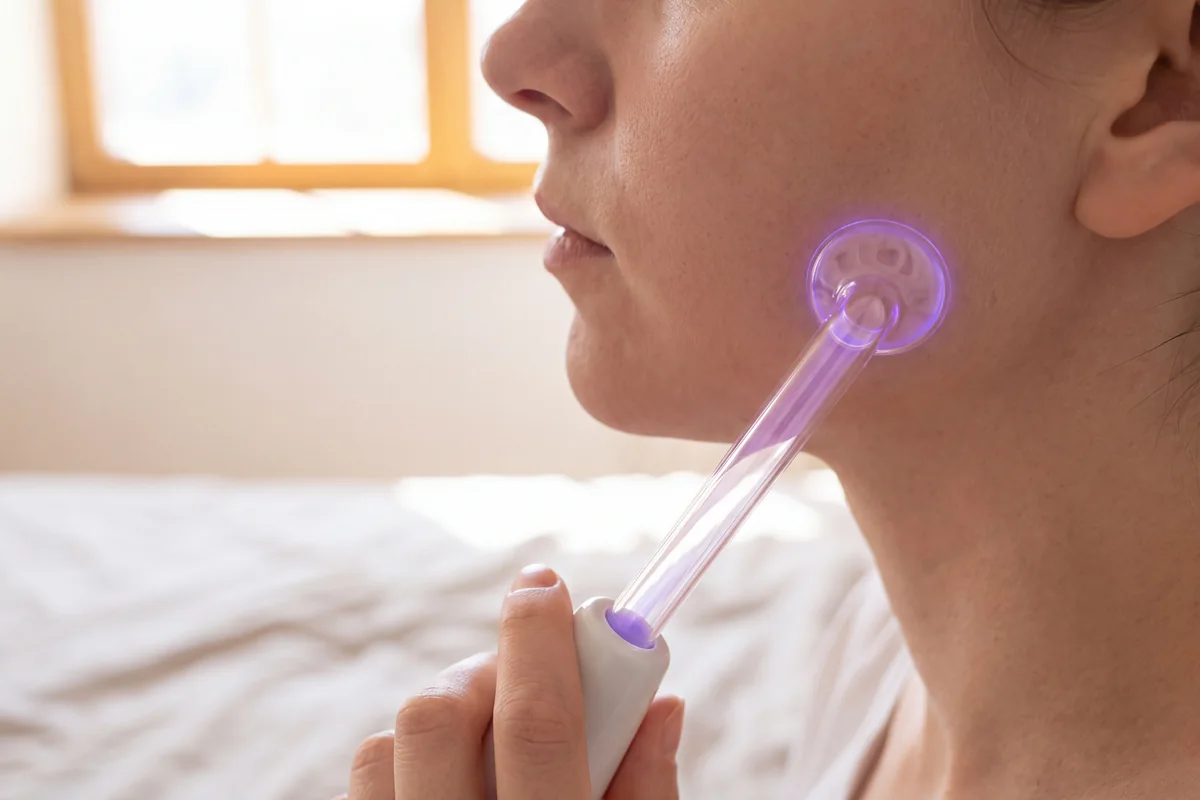
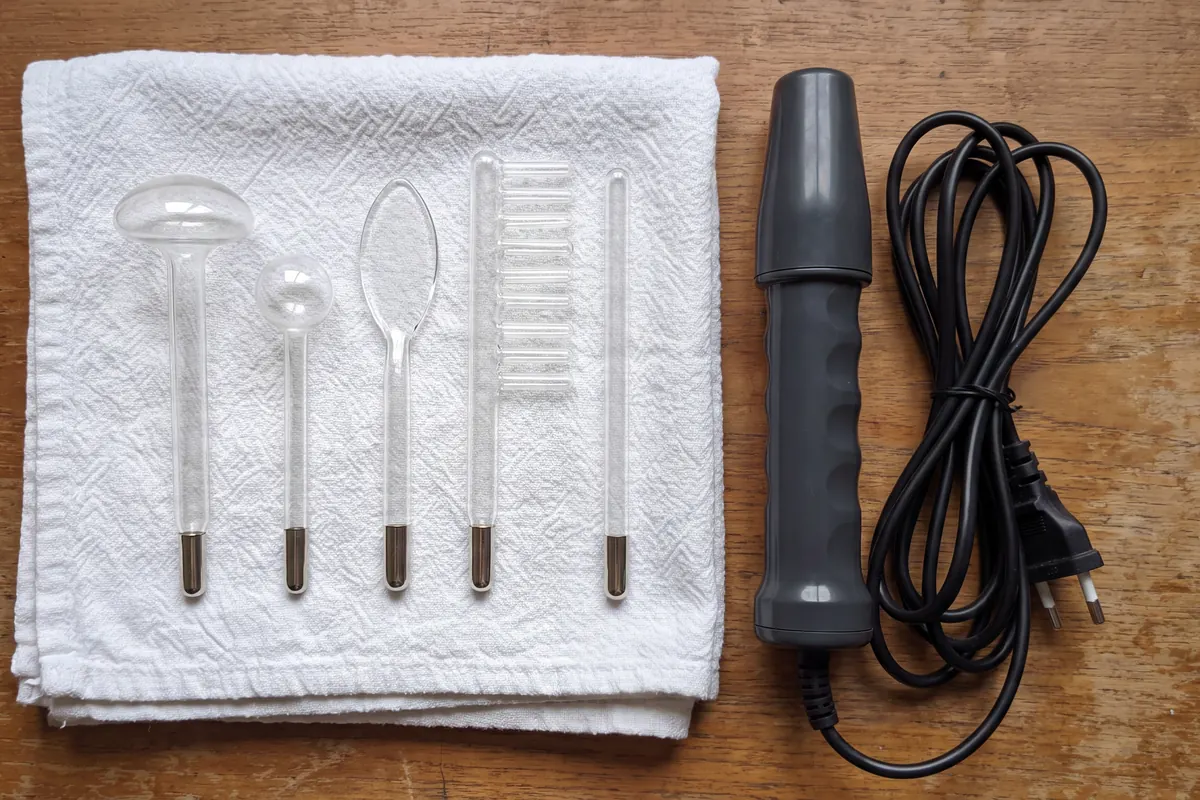
A high frequency wand sends a high-voltage, very low-current alternating current into a glass electrode, the interchangeable glass attachment you hold against the skin. The electrode is filled with gas. Argon usually glows violet or blue, and neon usually glows orange or pink. Brands often pitch argon for oily or breakout-prone skin and neon for mature skin, but those pairings come from marketing and salon tradition, not from head-to-head studies.
In the direct method, the only one meant for home use, you glide the electrode over your skin. The indirect method is a salon technique: the client holds a saturator electrode (a glass or metal rod) while a trained professional massages the face with their fingertips.
The tingle and faint buzz you feel are the current reaching the skin’s surface. If the electrode lifts slightly off the skin, tiny sparks jump the gap, which is why the wand must never meet alcohol-based or flammable products. The sharp, fresh smell is ozone, a gas the wand produces.
Ozone has antimicrobial properties in lab settings; whether a home wand does this on skin is not well studied. A wand makes only a small amount, but ozone irritates the lungs when inhaled (EPA), so use it in a well-ventilated room, and ask your doctor first if you have asthma or another breathing condition.
It helps to keep three kinds of claim apart: brand claims (marketing, however technical they sound), published research (small, often older, and rarely about home wands on real faces), and user reports (useful for “does it prickle?”, not for whether a skin condition changes).
For a closer look at the risks, read whether a high frequency wand is safe to use at home.
Can high frequency help breakouts and oily skin?
It may help oily skin look less shiny for a short time, but it does not clear acne or replace acne care. Inflamed spots are also exactly where the safety guidance says not to use it.
What is claimed: Brands often say the argon setting and the ozone it produces help skin look clearer and help spots dry up faster. The spot electrode, a small pointed tip, is marketed for single blemishes.
What is known: There is no good evidence that a home wand clears acne. The ozone point is a lab finding that has not been shown to carry over to a wand used on skin. Red, swollen or popped spots count as inflamed or broken skin, so using the wand on them goes against the safety box above. Any less-shiny look on oily skin is short-lived.
What to do first: Keep a gentle, consistent routine, and ask a pharmacist about over-the-counter acne products that suit your skin. The American Academy of Dermatology advises talking to a board-certified dermatologist if breakouts keep appearing after following at-home tips. Deep, painful or cystic acne should go straight to a board-certified dermatologist, because it can scar.
Can a high frequency wand shrink pores?
No device permanently shrinks pores. Some users find their pores look a little less noticeable right after a session, but that look is temporary.
What is claimed: “Tightens pores” and “refines texture” are common lines on wand packaging and salon menus.
What is known: Pore size is shaped largely by genetics, oil production and age, and none of those change with a few minutes of high frequency. No published research shows a lasting change in pore size from a home wand.
What to do instead: Gentle cleansing and lighter products help many people’s pores look less obvious. For stubborn blackheads or bumps, ask a pharmacist or dermatologist.
Does high frequency help fine lines?
Evidence does not show that a home wand changes fine lines or wrinkles. Any smoother or plumper look some users describe is short-lived.
What is claimed: Neon electrodes are often sold for mature skin, with brands saying they support collagen, firm the skin or improve circulation.
What is known: These claims come from manufacturers. There is no reliable research showing that an at-home wand changes collagen or wrinkle depth, and circulation claims are rarely backed by any measurement.
What to do instead: Daily broad-spectrum sunscreen helps protect against the sun damage that deepens lines, and a board-certified dermatologist can talk you through options, such as topical retinoids, if lines bother you.
Is high frequency safe for sensitive or rosacea-prone skin?
Caution comes first here. If you have rosacea, or think you might, see a board-certified dermatologist before trying a wand, and do not use one during a flare.
What is claimed: Some sellers say a wand “calms redness”. This is a marketing claim, not something shown in research.
What is known: The American Academy of Dermatology says rosacea makes skin extremely sensitive and lists heat among its common triggers. A wand brings warmth, friction and a tingling current to the face, so there is a real chance it could make redness worse. Flared, red skin also counts as inflamed skin, which the safety box rules out.
What to do first: Get a diagnosis and a plan from a board-certified dermatologist. If your dermatologist confirms your skin is simply reactive rather than rosacea-prone and has no objection to a wand, try the lowest setting for a few seconds on a small patch of calm, unbroken skin along the jawline, never on red or flushed skin, and watch how it responds over the next day before going further. Stop if you notice lasting redness, stinging or bumps.
Can you use high frequency with retinol or exfoliating acids?
It is safest to keep them apart rather than stack them on the same night. Retinoids and exfoliating acids such as glycolic or salicylic acid already make skin more prone to dryness and irritation, and adding a wand on top raises the chance of stinging and redness.
What is claimed: Some brands say a wand helps serums “absorb better” afterwards.
What is known: Improved absorption from a home wand has not been studied in any meaningful way, and with strong actives, pushing more product in is not necessarily a good thing. Many toners and acid products also contain flammable alcohol.
What to do first: Use the wand on nights when you are not applying a retinoid or acid, on clean, fully dry skin with no alcohol-based product on it. Skip it for a while after a peel, and whenever skin is peeling, raw or tight. If you use a prescription retinoid or any prescribed acne medicine, ask the prescriber before adding a wand. See a board-certified dermatologist if irritation keeps coming back.
Is high frequency safe for darker skin tones?
It can be used with care, but irritation is the main risk, because in darker skin it can leave dark marks that outlast the irritation itself.
What is claimed: Some marketing says a wand evens skin tone or fades dark marks. There is no good evidence for either, and high frequency does not treat hyperpigmentation.
What is known: DermNet explains that postinflammatory hyperpigmentation, the darkening that can follow skin inflammation or injury, is more common in people with darker skin. Anything that irritates the skin, a device included, can set it off.
What to do first: Patch test on a small, less visible area first, start on the lowest setting, and keep sessions gentle. Stop at the first sign of redness, burning or bumps. If you already have dark marks or patches, see a board-certified dermatologist, ideally one experienced with skin of color, before adding a device that could add irritation.
Can you use a high frequency wand under the eyes?
Keep the wand away from your eyes and follow your device manual on the eye area; most manuals say to avoid it. The eyes and eyelids are always off limits.
What is claimed: Sellers often show wands gliding under the eyes to “de-puff” or soften crow’s feet.
What is known: There is no good evidence that a wand changes puffiness, dark circles or crow’s feet. Under-eye skin is thin and sits right next to the eye, so a slip or spark there is a real risk.
What to do instead: Puffiness and dark circles often relate to sleep, allergies and genetics. If puffiness lingers, or one eye swells suddenly, see a doctor rather than reaching for a device.
Does high frequency on the scalp help hair growth?
There is no good evidence that high frequency regrows hair. Hair loss has many possible causes, so it always deserves a visit to a board-certified dermatologist.
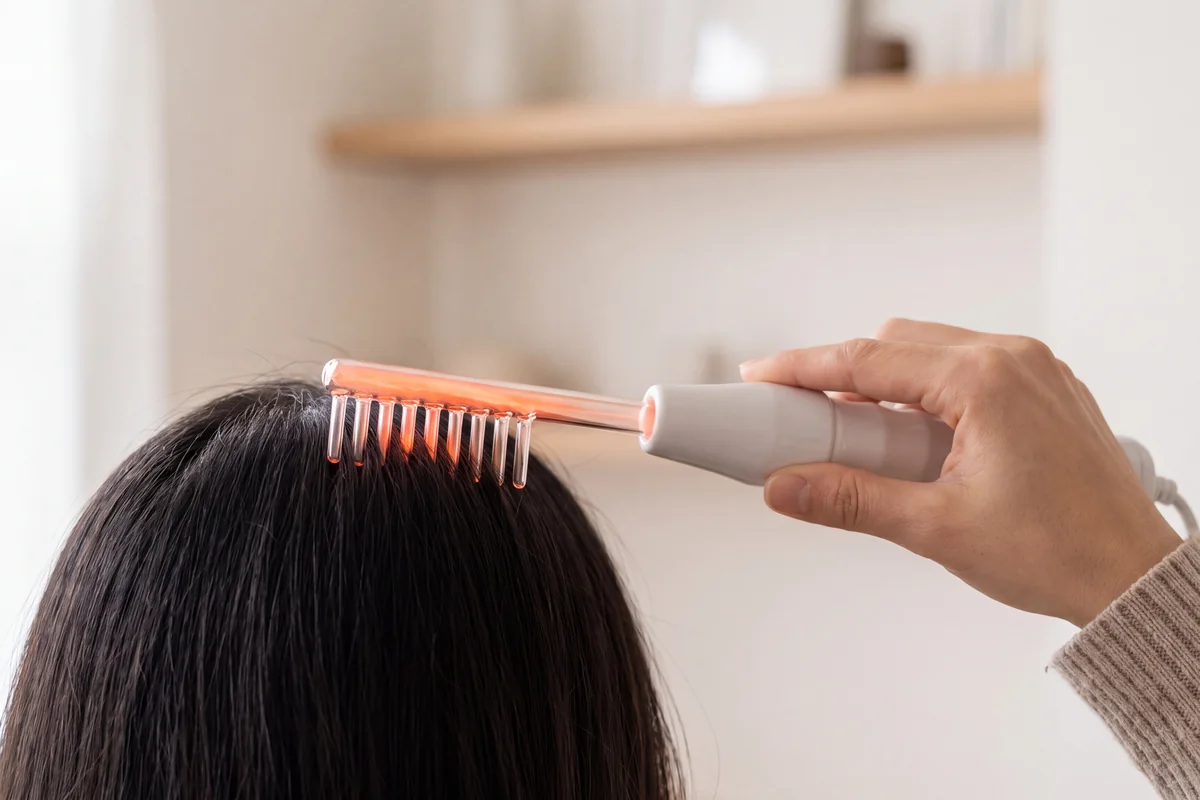
What is claimed: The comb electrode is sold for the scalp, with brands saying it stimulates hair growth, boosts blood flow or helps a flaky scalp.
What is known: These are manufacturer claims without solid research behind them for home wands. The American Academy of Dermatology says that to get an accurate diagnosis of hair loss, it helps to see a board-certified dermatologist, because hair loss has many possible causes that call for different approaches.
What to do first: See a board-certified dermatologist about thinning, shedding, bald patches or a sore or flaky scalp. If you use a comb electrode on your scalp for the tingle, hair should be clean and fully dry, with no hairspray, dry shampoo or alcohol-based tonic in it, since these can catch a spark. Take out metal clips and pins first.
Can teenagers use a high frequency wand?
Only with a parent or guardian involved, and only if the device manual’s age guidance allows it. For teen acne, a doctor is the right first step, not a device.
What is claimed: Wands are heavily promoted on TikTok as a way to deal with spots.
What is known: Check the age guidance in your device’s manual before anyone younger uses it; the NuDerma manual, for example, says not to use the device on children. A wand does not treat acne, and deep or persistent acne can leave scars, which is why getting medical help early matters more than any gadget.
What to do first: Book an appointment with a family doctor or GP, who can refer to a board-certified dermatologist if needed. If a teen does use a wand, a parent should read the manual, supervise every session, and make sure it stays off inflamed spots.
What can you realistically expect from a high frequency wand?
A realistic expectation is a pleasant, optional step that may leave oily skin looking less shiny and your face feeling refreshed for a while. It will not replace sunscreen, a sensible skincare routine, or care from a dermatologist.
Across every concern above, the same principles hold: start on the lowest setting, keep to the session length in your device manual, use it only on clean, dry, product-free skin, keep it away from the eyes, and stop at lasting redness, stinging, bumps or darkening.
For setup, settings and cleaning, follow how to use a high frequency wand at home. If you are unsure whether the device suits you at all, check who should not use a high frequency wand before a first session.
When to see a dermatologist instead
See a board-certified dermatologist, not a device, if any of these apply:
- breakouts that are deep, painful, cystic, scarring, or not improving with a sensible routine
- redness, flushing or visible blood vessels that might be rosacea
- dark marks or patches that are spreading or not fading
- hair thinning, shedding or bald patches
- irritation, burning or a rash after using a wand that does not settle quickly
- any spot or mole that is new, changing, bleeding or not healing
In the US, the American Academy of Dermatology’s Find a Dermatologist tool lists board-certified dermatologists near you. In the UK, start with your GP, who can refer you to a dermatologist. For how this site handles health information, read the medical disclaimer.
FAQ
What are the main benefits of a high frequency wand?
For some users, skin may look less oily and feel refreshed after a session. Evidence for at-home wands is limited, mostly small or older, and most bigger claims come from brands rather than research.
Does high frequency get rid of acne?
No. A high frequency wand does not treat acne, and it should not be used on red, swollen or popped spots. If breakouts keep appearing, or are deep and painful, see a board-certified dermatologist.
Can I use a high frequency wand if I have rosacea?
Only after a board-certified dermatologist has looked at your skin, and never during a flare. Rosacea makes skin extremely sensitive and heat is a common trigger, so a wand could make redness worse.
Is high frequency safe for darker skin tones?
It can be used with care. Patch test first, start on the lowest setting, and stop at any redness, because irritation can lead to postinflammatory hyperpigmentation, which is more common in darker skin.
Can high frequency regrow hair?
There is no good evidence that it does. Hair loss has many possible causes, so see a board-certified dermatologist for a diagnosis.
This article is for general educational purposes and is not medical advice.