Before a high frequency session, start with clean, completely dry skin, then add at most a thin layer of water-based serum if your manual suggests one, and never apply oil-based or alcohol-based products, which the NuDerma manual warns against. After a session, a plain, gentle moisturizer and daytime sunscreen are the usual choices, and skip strong actives that night if your skin is red or tingly.
Safety first: Do not use a high frequency wand if you have a pacemaker or any implanted electronic device, are pregnant, have epilepsy or a heart condition, or on broken, infected or inflamed skin. Keep it away from alcohol-based or flammable products, because the wand can spark. This guide is educational, not medical advice. For ongoing acne, rosacea or other skin concerns, see a board-certified dermatologist.
If you are new to the device itself, start with high frequency facial at home.
Your own device manual always comes first; if anything here differs from it, follow your manual. The manual referred to throughout is the NuDerma high frequency wand user manual, which we cite as a typical example rather than a recommendation. For how this site handles health information, read the Medical Disclaimer.
What should you put on your face before high frequency?
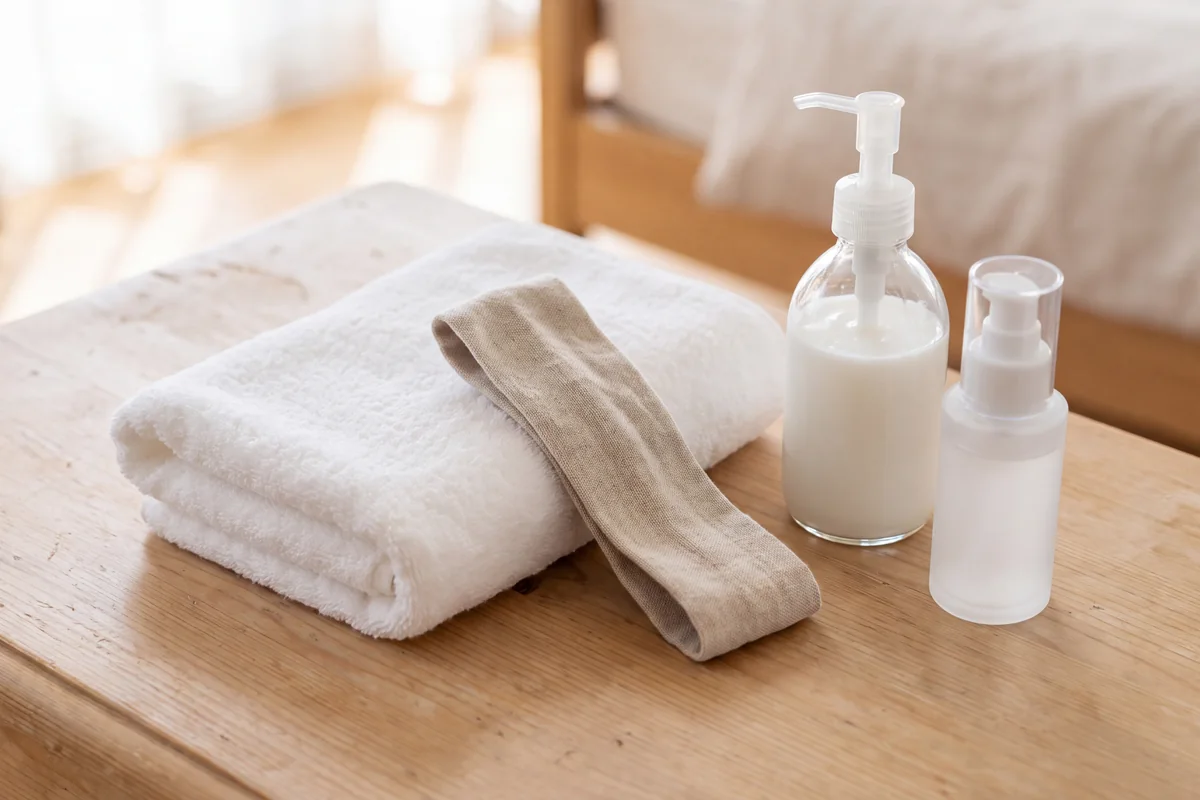
Clean, dry skin, plus a thin layer of water-based serum only if your manual suggests one. Start with skin that has been cleansed, rinsed and patted completely dry, with no oil, moisturizer, toner or makeup left on it. The NuDerma manual says the wand can be used on bare skin but recommends a water-based serum to help it glide smoothly (NuDerma manual).
What you need
- A gentle cleanser you already use without problems
- A clean, dry towel
- A hair tie or headband
- A dry surface to work at, away from the sink and bathroom taps
- A water-based serum, only if your manual suggests one
Prepare your skin
- Remove all makeup.
- Wash your face with a gentle cleanser and rinse well.
- Pat your face dry with a clean towel.
- Wait a few minutes so any damp spots (hairline, sides of the nose, under the jaw) dry fully.
- Take off all metal jewelry.
- Tie your hair back and move away from the sink before you plug in the wand.
- If your manual suggests a serum, smooth a thin layer of a water-based one over the area you will treat, keeping it away from your eyes.
For the session itself, including settings and electrode choice, follow how to use a high frequency wand at home.

Why does skin need to be completely dry?
Dry skin keeps a mains-powered device away from water, makes the session more comfortable, and keeps anything flammable out of the path of a spark.
Water and electricity
The NuDerma manual says not to use the wand with wet hands or near baths, showers, basins or other water (NuDerma manual). Dry your hands as well as your face before you pick up the wand, and never use it beside a running tap.
Sparks and comfort
The tingling you feel comes from the current, and when the electrode lifts slightly off the skin, small sparks jump across the gap. Clean, dry skin, or an even layer of water-based serum, lets the glass glide evenly. Patches of leftover water or half-dried, tacky product can make the electrode drag and skip, which can mean more snaps than you expected.
Alcohol and flammability
Alcohol evaporates into a flammable vapor, and the wand can spark. The NuDerma manual says never to use the wand near combustible liquids or gases or with alcohol-based products (NuDerma manual). That includes products you might not think of as “alcohol”: some toners, hand sanitizer, makeup setting sprays, perfume and aerosol hair products.
The same applies to electrodes: if your manual’s cleaning method uses an alcohol wipe, let the glass dry completely before switching the wand on.
What should you remove before a session?
Remove anything oily, alcohol-based, flammable or metal from your face and the area around it:
- Makeup, including foundation, tinted sunscreen, powder and eye makeup.
- Oils and balms, including facial oils and leftover oil cleanser. If you use an oil cleanser, follow it with a water-based cleanser so no oily film remains.
- Alcohol-based toners, mists and setting sprays. Skip them before a session rather than applying and waiting.
- Metal jewelry. The NuDerma manual recommends removing metal objects, such as jewelry, that could touch the wand during a session (NuDerma manual). That covers earrings, necklaces, rings and bracelets.
- Hair products near the hairline, such as hairspray, dry shampoo and styling oils. Tie your hair back so it stays off your face.
Why are oil-based and alcohol-based products a no?
The NuDerma manual warns against using the wand with oil-based or alcohol-based products and near combustible liquids or gases (NuDerma manual).
For alcohol, the reason is flammability: the vapor can catch from a spark. The NuDerma manual gives no separate reason for oils, but many oils are combustible, and an oily film also stops the glass gliding cleanly. Either way, leave them off.
If your manual names a type of product to use with the wand, such as a water-based serum, use only that type. If it does not, use bare, dry skin.
Can you use gauze with a high frequency wand?
Only if your manual describes it, and only in the way it describes.
The direct method, the only one meant for home use, means moving the electrode over your skin. The indirect method is a salon technique, where the client holds a saturator (a rod-shaped electrode) while a trained professional massages the face with their fingers. In salons, some estheticians also pass the electrode over dry gauze laid on the skin, which creates small sparks on purpose. This site does not recommend sparking at home, because sparks are the main fire and irritation risk. The NuDerma manual mentions gauze only in passing and gives no gauze method.
If your manual includes a gauze method, use the material it specifies, keep the gauze clean and completely dry, and never soak it in toner, alcohol or any other liquid. If your manual does not mention gauze, do not improvise one.
What should you put on your skin after high frequency?
A plain, gentle moisturizer, and a broad-spectrum sunscreen if it is daytime. Apply them once the wand is switched off and unplugged.
Skin can feel warm, tingly or slightly pink for a while after a session, so this is not the moment for fragrance, essential oils or exfoliating products. Good choices are:
- A fragrance-free moisturizer you already know your skin tolerates.
- A simple hydrating serum, if it is one you already use without problems.
- A broad-spectrum sunscreen in the morning, as part of your normal daytime routine.
When can you use retinol, acids or peels after high frequency?
Not that night if your skin is red or tingly. Skin can react more easily when you stack a device session with strong actives such as retinol, exfoliating acids (glycolic, lactic or salicylic acid) or a peel.
If you use a prescription retinoid or have had a professional peel, ask your board-certified dermatologist before adding a high frequency wand to your routine.
Should you patch test new products?
Yes. The American Academy of Dermatology recommends trying a new skin care product on a small spot, such as the underside of your arm or the bend of your elbow, twice a day for 7 to 10 days before using it as normal (AAD: how to test skin care products).
To make any reaction easy to trace, do not start a new product in the same week you start using the wand, and never on the same day as a session. If your skin is very reactive, or you have rosacea, read who should not use a high frequency wand and see a board-certified dermatologist before trying one.
What should you do if your skin stings or turns red?
Stop the session straight away, then keep your skin care simple until it settles.
- Switch off the wand and unplug it.
- Put the wand away from the sink.
- Rinse your face with cool or lukewarm water.
- Pat your skin dry with a clean towel.
- Apply a plain, fragrance-free moisturizer and nothing else.
- Skip actives and the wand until your skin feels fully settled.
If the sparks seemed stronger than usual, unplug the wand before inspecting it, and do not use an electrode that is cracked or chipped. If redness, stinging or swelling does not settle, or you notice blistering or a burn, stop using the wand and see a doctor or board-certified dermatologist. For the full list of signs that mean stop, read is a high frequency wand safe to use at home.
Does the ozone smell matter?
The fresh, sharp smell during a session is ozone, a gas the wand produces as the current passes through air. Ozone has antimicrobial properties in lab settings; whether a home wand does this on skin is not well studied. A wand makes only a small amount, but ozone irritates the lungs when inhaled (EPA), so use it in a well-ventilated room, and ask your doctor first if you have asthma or another breathing condition.
FAQ
Can I put moisturizer on before high frequency?
Not unless your device manual says to. Start with clean, completely dry skin, and apply a plain, gentle moisturizer after the session, once the wand is unplugged.
Can I use toner before high frequency?
Skip it before a session. Alcohol-based toners are flammable and the NuDerma manual warns against alcohol-based products near the wand, and any toner leaves skin damp, so save it for later in your routine.
Can I use retinol the same night as high frequency?
Not if your skin is red or tingly. Skin can react more easily when you stack a session with strong actives, so keep them on different nights, and ask your board-certified dermatologist if you use a prescription retinoid.
Do I need to take my earrings off?
Yes. The NuDerma manual recommends removing metal jewelry that could touch the wand during a session. If you have a piercing you cannot take out, check your manual or contact the maker first.
What should I do if my skin stings during a session?
Stop, switch off and unplug the wand, rinse with cool or lukewarm water, pat dry and apply a plain, fragrance-free moisturizer. If redness, stinging or swelling does not settle, or you notice blistering or a burn, see a doctor or board-certified dermatologist.
This article is for general educational purposes and is not medical advice.