
To use a high frequency wand at home, start with clean, dry skin, insert the electrode (the glass tube that touches your skin) while the wand is switched off, turn it on at the lowest setting, and glide it in small circles for no more than 10 to 15 seconds on any one area. Then stop at your manual’s session limit: the NuDerma high frequency wand user manual, which we cite as a typical example rather than a recommendation, sets that limit at 5 minutes, every other day.
Your own wand’s manual always comes first, so if anything in this guide differs from it, follow your manual. Keep expectations realistic too. Some users find a wand helps their skin look clearer or smoother, but evidence for at-home high frequency wands is limited, and this is a cosmetic routine rather than a fix for any skin condition.
Safety first: Do not use a high frequency wand if you have a pacemaker or any implanted electronic device, are pregnant, have epilepsy or a heart condition, or on broken, infected or inflamed skin. Keep it away from alcohol-based or flammable products, because the wand can spark. This guide is educational, not medical advice. For ongoing acne, rosacea or other skin concerns, see a board-certified dermatologist.
Before you start: should you use a wand at all?
Not everyone should, so run through this quick check first. Do not use a high frequency wand at all if any of these apply to you:
- You have a pacemaker or any implanted electronic device.
- You are pregnant or might be pregnant.
- You have epilepsy or a seizure disorder.
- You have a heart condition.
- You have metal implants, or dermal fillers or other injectables, in or near the area you want to use it on.
- The skin in that area is broken, irritated, infected or inflamed.
- The area has active skin cancer, a suspicious spot, or skin that lacks sensation.
Check with a professional before your first session if:
- You wear a body-worn device such as an insulin pump, are breastfeeding, have high or low blood pressure, or have asthma or another breathing condition. Ask your doctor.
- You have braces or a permanent retainer. Ask your dentist.
- You have any diagnosed skin condition. Ask a dermatologist.
Do not use a wand on children. If you are not sure whether any of this applies to you, ask your doctor before you start. For the full picture of risks, read our guide to whether a high frequency wand is safe to use at home, along with the site’s medical disclaimer. For every rule and where it comes from, see who should not use a high frequency wand.
What do you need to use a high frequency wand?
You need very little: the wand, a clean electrode, and a few basics for prep and cleaning. Gather everything before you plug anything in.
- Your wand and its manual.
- A clean, undamaged glass electrode, with no cracks or chips.
- A water-based serum, if your manual suggests one.
- A soft cloth.
- A little rubbing alcohol, for cleaning the electrode after the session (not for your skin).
- A wall socket in a dry, well-ventilated room, away from water.
That manual says a water-based serum helps the wand glide, and that oil-based and alcohol-based products should not be used with it. This matters for safety as well as comfort: the wand can make small sparks, and alcohol-based products are flammable. For more on what to use before and after, see what to put on your skin before and after high frequency.
If you are still choosing a wand, look for an electrical safety listing such as UL or ETL (or CE or UKCA in Europe and the UK; FCC compliance covers radio interference, not shock safety). If you want the bigger picture of what these devices are and how they work, start with our overview of high frequency facials at home.
Which electrode should you use?
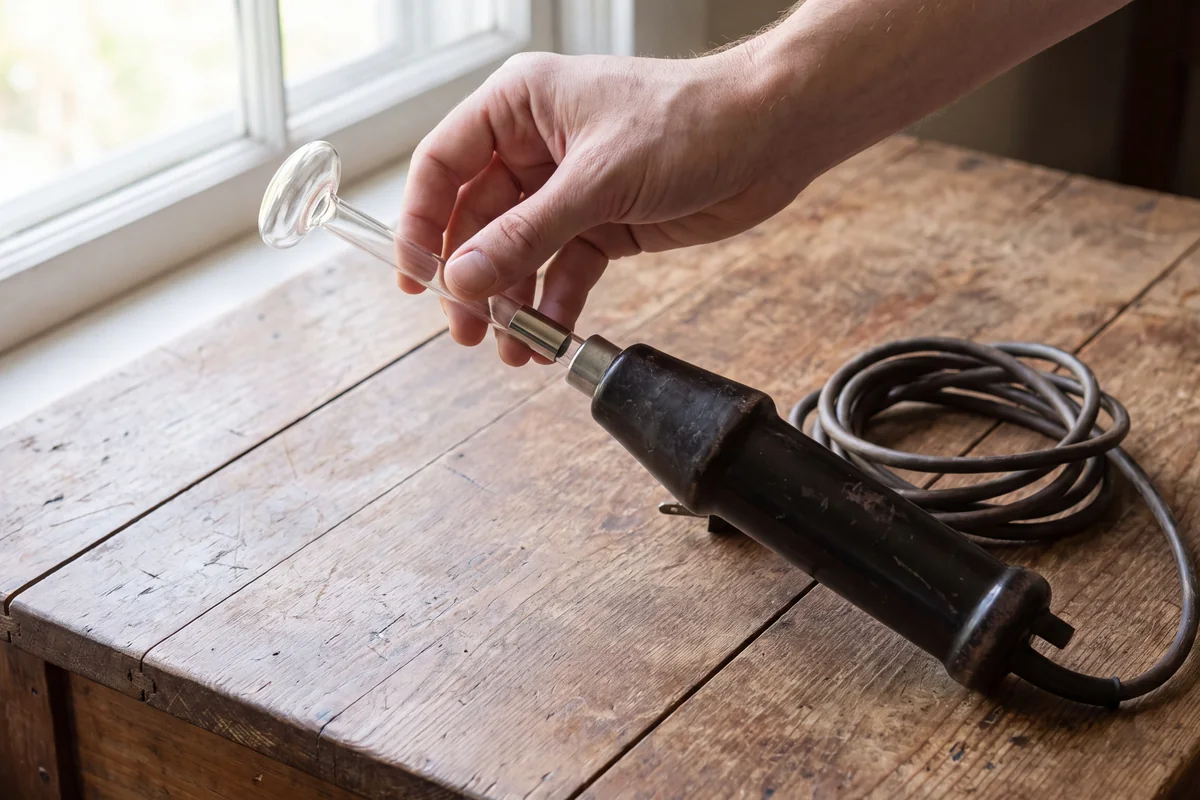
Most people start with the mushroom electrode for the forehead and cheeks, then switch to a smaller spot or tongue electrode for contours. Electrodes are interchangeable glass tubes, and their shape decides where they fit.
- Mushroom: a flat, rounded head for larger flat areas such as the forehead and cheeks. It is the easiest one to learn with.
- Spot: a small, narrow tip for small areas, such as the chin. Some manuals describe tapping it on a blemish; this guide leaves that out, because a red or swollen spot counts as inflamed skin, which this site says to avoid.
- Tongue: a flat, curved head that follows contours, such as along the jawline.
- Comb: a row of glass teeth that passes through the hair over the scalp. If you are thinking about the comb because of thinning hair or hair loss, see a board-certified dermatologist first.
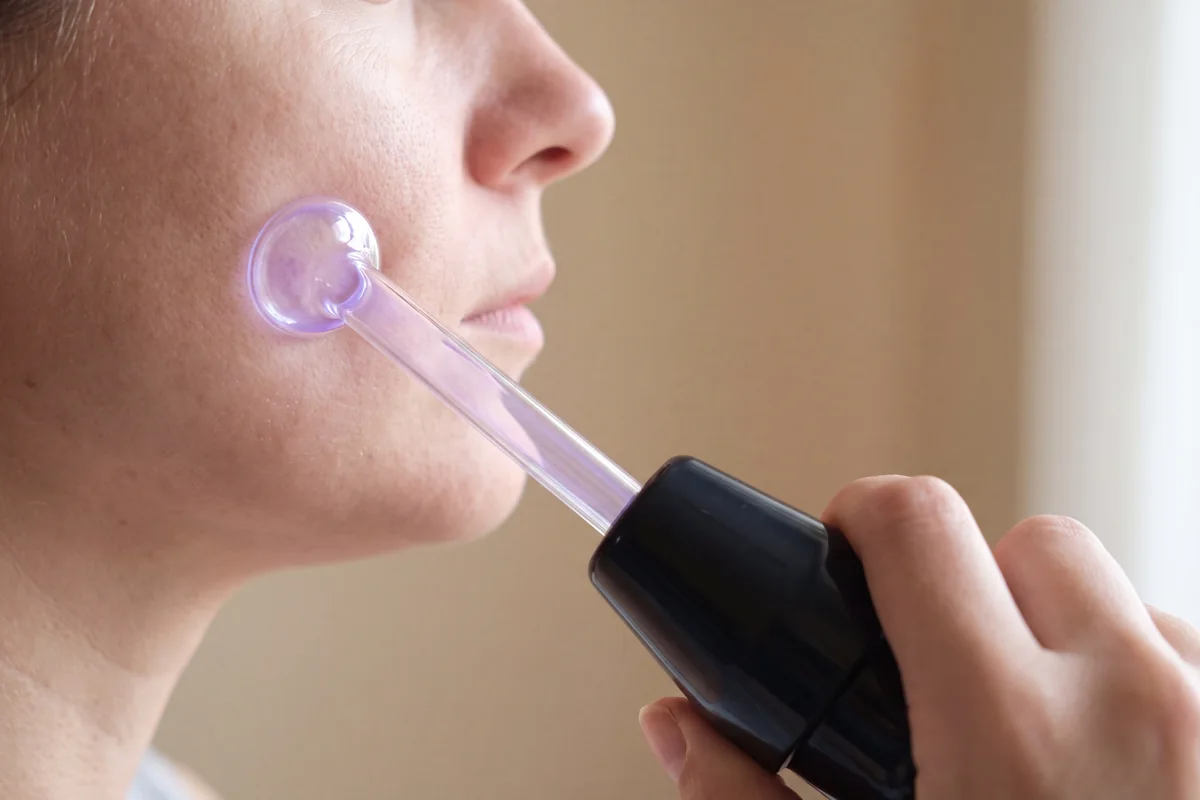
The glow comes from the gas sealed inside the tube. Argon-filled tubes usually glow violet and neon-filled tubes usually glow orange. Brands describe different benefits for each color, but those are brand claims rather than findings from strong research, so choose by electrode shape and your manual rather than by color.
Direct method only
At home, use only the direct method, where the glass electrode itself touches and glides across your skin. The indirect method is a salon technique: the client holds a rod called a saturator while a trained professional massages the face with their fingers. It is not meant for home use, so it is not covered here.
How do you use a high frequency wand, step by step?
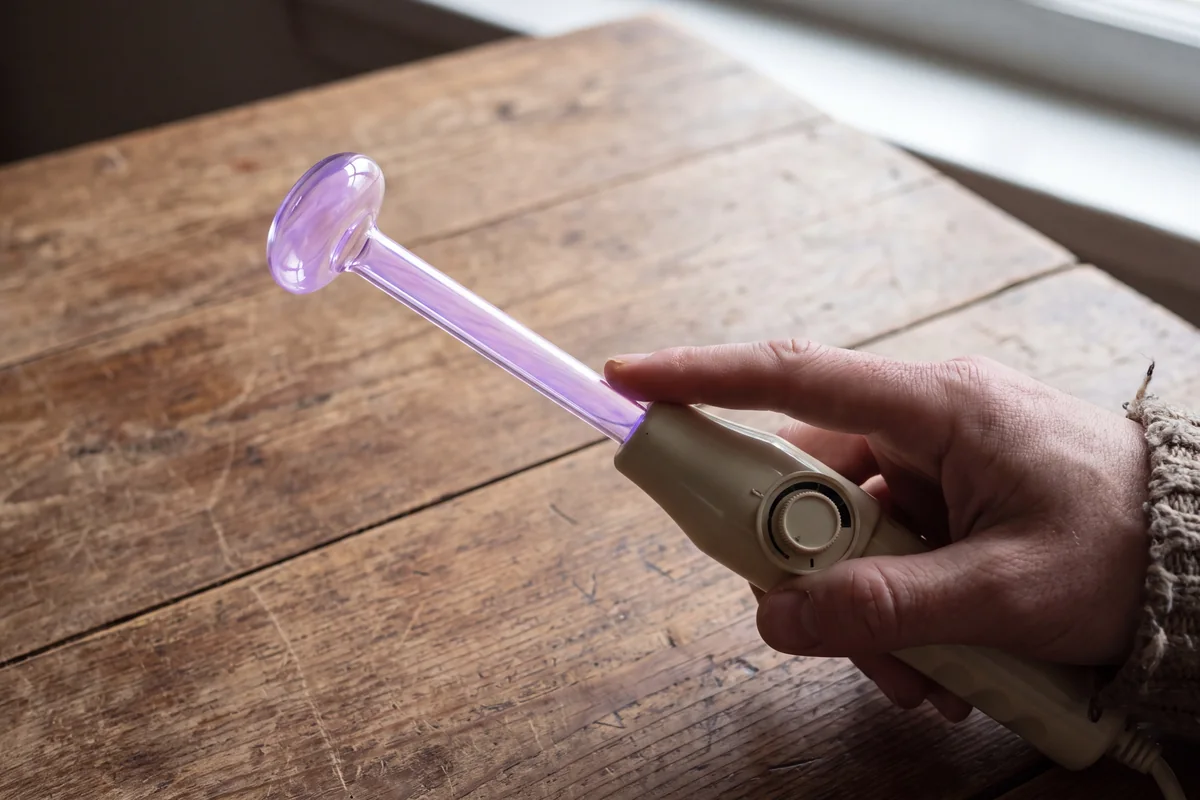
Prepare your skin and space, fit the electrode with the power off, start on the lowest setting and keep the glass moving in small circles. Each step below is one action, based on that manual; where your own manual differs, follow yours.
- Read the warnings and session limits in your own wand’s manual.
- Take off any metal jewelry.
- Sit in a dry, well-ventilated spot near a wall socket, away from basins, bathtubs and showers.
- Make sure your hands are completely dry.
- Cleanse your face.
- Pat your skin dry.
- Smooth on a thin layer of water-based serum, if your manual suggests one.
- Check the electrode for cracks, chips or dirt.
- With the wand powered off, insert the electrode, holding the glass just above the metal base. Never hold it by the tip, and never force it in.
- Plug the wand straight into a wall socket, with no extension cord, power strip, timer or voltage adapter.
- Turn the dial to the lowest setting.
- Rest a fingertip on the base of the glass electrode.
- Switch the wand on.
- Touch the glass down on your skin, keeping your fingertip on the base as you do.
- Lift your fingertip off the glass, then glide the electrode in small circles, keeping it in contact with your skin and always moving.
- Move on to a new area after 10 to 15 seconds at most.
- Keep well clear of the direct eye area, eyelids, lips and other sensitive areas.
- Stop when you reach your manual’s session limit.
- Switch the wand off.
- Unplug it.
Why the glass stays on your skin
Lifting the glass off your skin makes small sparks. That is why the electrode stays in contact the whole time, and why flammable and alcohol-based products must stay away from your skin and the wand. The fingertip on the base in steps 12 and 14 is there because that manual says it helps avoid small static shocks when you switch on and touch down.
Some guides teach “sparking” on purpose, lifting the glass slightly so sparks jump to one spot. This guide does not, because sparks are the main fire and irritation risk. Never switch the wand on before an electrode is inserted, and never swap electrodes while it is powered on.
What should you feel and hear during a session?
On a low setting, expect a light tingle at most, and possibly a faint buzz. That manual says a slight buzz or hum may or may not be heard and gets louder at higher settings. It also says the tube does not always glow brightly once it is on your skin, so a dimmer glow during a session does not by itself mean something is wrong.
Pain is not part of the process. If anything hurts, switch off and stop.
What is the smell?
Some people notice a sharp, fresh smell during a session. That is ozone, a gas that forms when the electrical charge meets the air. Ozone has antimicrobial properties in lab settings; whether a home wand does this on skin is not well studied. A wand makes only a small amount, but ozone irritates the lungs when inhaled (EPA), so use it in a well-ventilated room, and ask your doctor first if you have asthma or another breathing condition.
What setting should you start on?
Start on the lowest setting. That manual says to use the lowest setting for your first few uses, suggests level 1 or 2 for beginners, and says a high power level is not necessary.
Dials are not labelled the same way on every wand, so a number on one brand’s dial does not tell you much about another’s. Go by your own manual’s beginner guidance. If a session ever feels uncomfortable, turn the dial down or stop. For your first sessions, low is the whole plan.
How long and how often should you use it?
Keep sessions short and spaced out. That manual sets a maximum of 5 minutes, every other day, with no more than 10 to 15 seconds on any one area before you move on.
Other brands may set different limits, so check your own manual and think of its limit as a ceiling, not a target. A short session that covers the forehead, cheeks and chin with the glass always moving fits easily inside that limit.
What should you do after a session?
Apply your usual moisturizer, then pay attention to how your skin responds. That manual says to stop using the wand if you notice any allergic response, swelling, skin discoloration, extreme redness, hyperpigmentation or unusual pain.
- If your skin objects, stop using the wand. If a reaction does not settle, speak to a doctor or pharmacist.
- If you have a darker skin tone, irritation can leave darker marks known as post-inflammatory hyperpigmentation, which is more common in darker skin (DermNet). Start on the lowest setting on a small area first.
- If you have ongoing acne or rosacea, a wand is not a substitute for proper care. See a board-certified dermatologist.
How do you clean and store the wand?
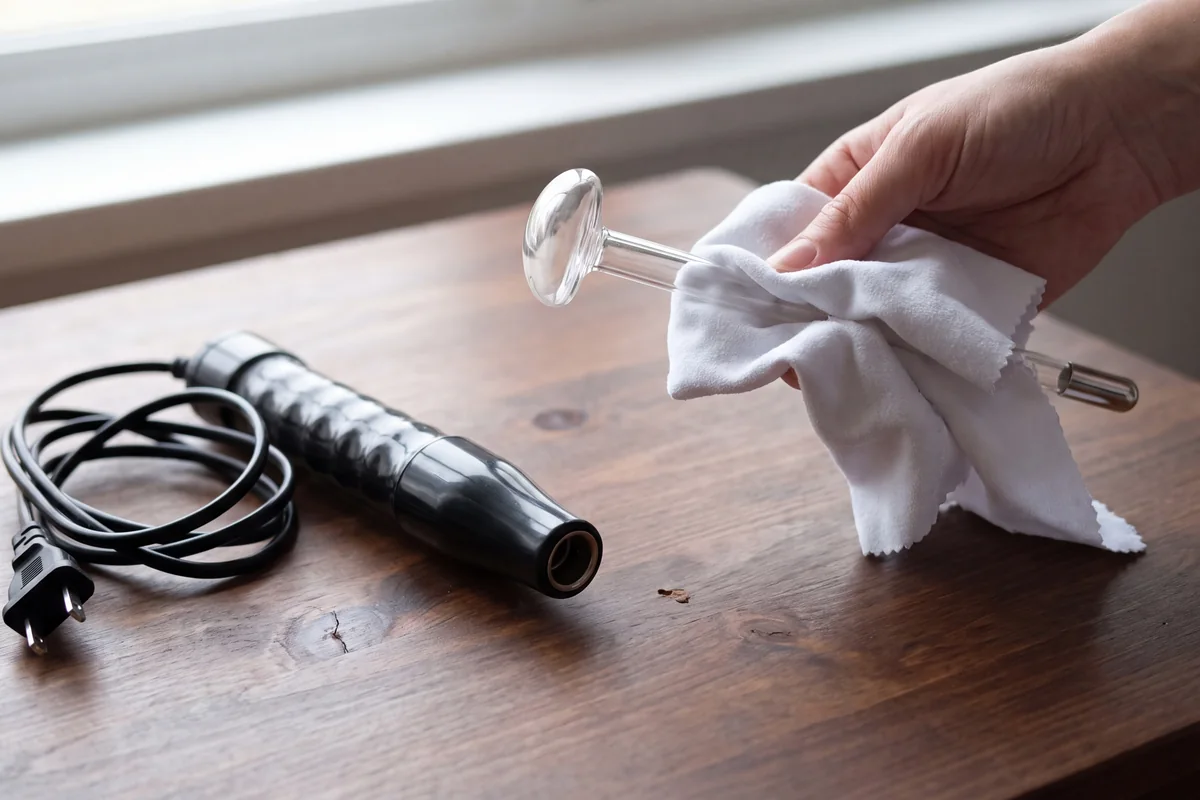
Switch it off, unplug it, wipe the electrode with a soft cloth and a little rubbing alcohol, and let it dry completely. That manual says the tube must be completely dry before you store it or use it again.
- Check that the wand is switched off.
- Check that it is unplugged.
- Remove the electrode, holding the glass just above the metal base, never by the tip.
- Wipe the glass with a soft cloth and a little rubbing alcohol.
- Leave the electrode until it is completely dry.
- Store the wand and electrodes in a dry place, away from water.
Keep the rubbing alcohol for cleaning only, well away from the wand while it is plugged in. This routine after every session covers the basics.
What can go wrong, and how do you fix it?
Most hiccups are minor, but a few mean the wand should not be used again. Whatever the problem, switch the wand off and unplug it before you inspect the wand, the electrode or the cord.
You feel a small static shock when you start
This usually happens at the moment you switch on or touch down. Rest a fingertip on the base of the glass as you switch on and as you touch the electrode to your skin, as that manual advises.
The glass snaps or sparks on your skin
Sparks happen when the glass lifts off the skin. Keep the electrode in steady contact and moving. Check that nothing alcohol-based or flammable is on your skin, and if it keeps happening, stop the session.
The electrode looks dim or you hear no buzz
As the section on what to expect explains, a dim glow or a quiet buzz alone is not a fault. If the electrode does not light at all, switch off, unplug, and check that it is properly seated, removing and reinserting it gently with the power off and never forcing it. If it still does not work, contact the manufacturer rather than opening the wand.
The cord is damaged, or the wand smokes, makes a loud noise or looks broken
Stop and unplug it straight away, and do not use it again. The same applies to a wand that has been dropped, damaged, left outdoors or got wet, and to any cracked or chipped electrode. Contact the manufacturer about a repair or replacement.
Your skin reacts
Stop at any allergic response, swelling, skin discoloration, extreme redness, hyperpigmentation or unusual pain, as that manual directs. If the reaction does not settle, or you are unsure whether to keep using the wand, see a doctor or a board-certified dermatologist.
FAQ
How long should a high frequency wand session last?
At most 5 minutes, every other day, according to the NuDerma manual, with no more than 10 to 15 seconds on any one area. If your own manual gives a different limit, follow your manual.
What setting should a beginner use?
The lowest one. The NuDerma manual recommends the lowest setting for the first few uses and level 1 or 2 for beginners, and says a high power level is not necessary.
Can I use a high frequency wand near my eyes or lips?
No. The NuDerma manual says to avoid the direct eye area, eyelids, lips and other sensitive areas, so keep the electrode on the forehead, cheeks, chin and jawline.
Why doesn’t my wand glow brightly on my skin?
That can be normal. The NuDerma manual notes the tube does not always glow brightly on skin and that a buzz may or may not be heard. If the electrode does not light at all, switch off, unplug and check that it is properly seated.
Does a high frequency wand actually work?
Evidence for at-home wands is limited. Some users find their skin looks clearer or smoother, but there is little published research on home devices, so think of a wand as a cosmetic extra and see a board-certified dermatologist for ongoing skin concerns.
This article is for general educational purposes and is not medical advice.