A faint, fresh, slightly sharp smell during a high frequency session is common. It is ozone, made where the current meets the air at the glass, and a faint trace is an expected by-product rather than a fault. It is still not something to breathe on purpose, so use the wand in a well-ventilated room. A burning, hot-plastic or electrical smell, smoke or a loud new noise is different: switch the wand off, unplug it by the plug and stop using it until the brand’s support has advised you.
Safety first: Do not use a high frequency wand if you have a pacemaker or any implanted electronic device, are pregnant, have epilepsy or a heart condition, or on broken, infected or inflamed skin. Do not use it in or near areas with metal implants, dermal fillers or other injectables. Use a water-based serum only if your manual suggests one, and keep the wand away from oil-based, alcohol-based or flammable products, because it can spark. This guide is educational, not medical advice. For ongoing acne, rosacea or other skin concerns, see a board-certified dermatologist.
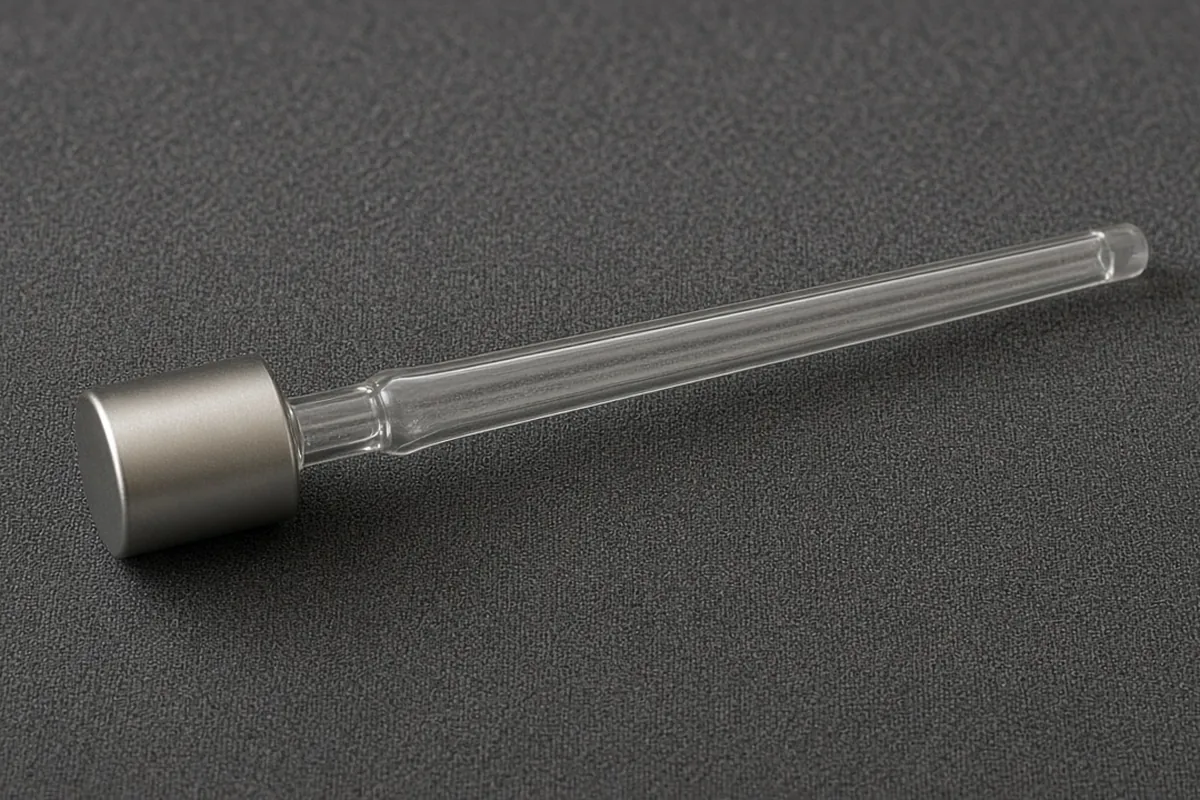
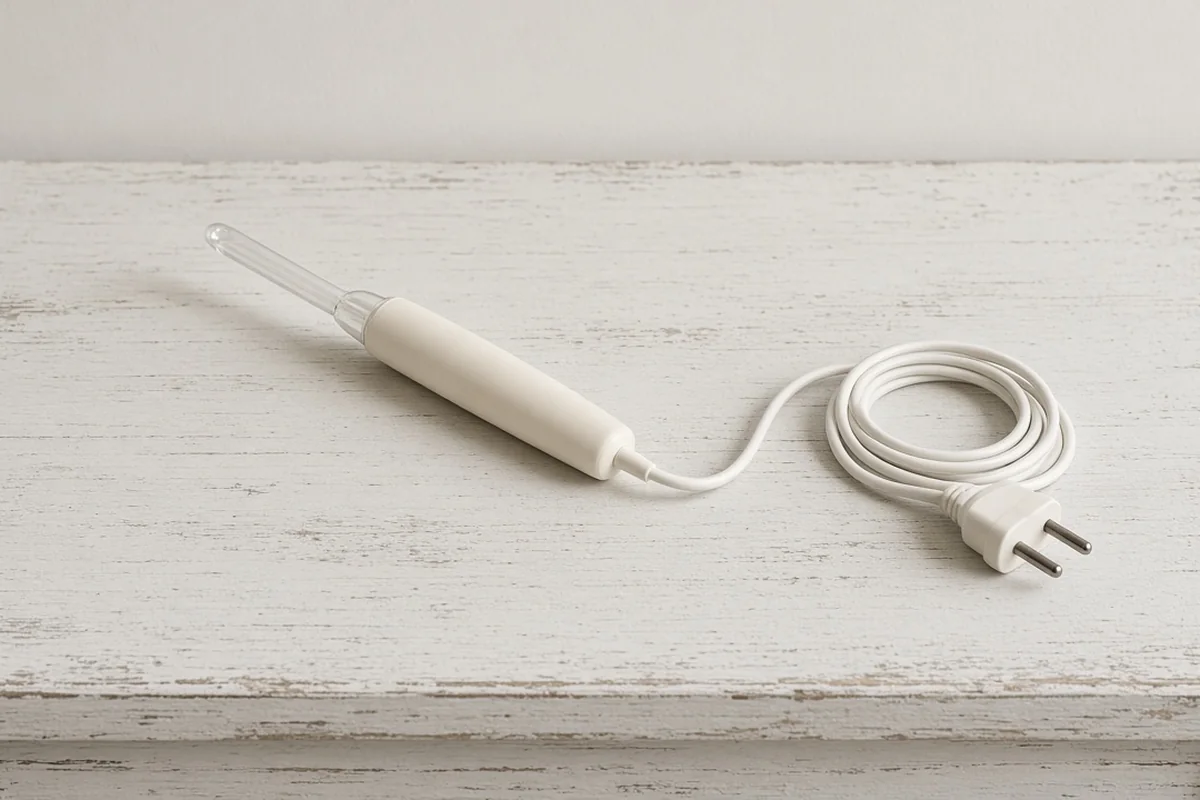
A high frequency (HF) wand sends a low intensity current through a glass electrode, the removable glass attachment that touches your skin. New to these devices? Start with what a high frequency facial at home can realistically do.
What is the smell, and why does a high frequency wand make it?
The smell is ozone, a molecule made of three oxygen atoms. It forms right at the glass, where the current meets the air around your skin.
The current passes into a sealed glass electrode filled with argon, which glows violet or blue-violet, or neon, which glows orange-red. A 2018 lab study on high frequency equipment describes the basic setup as a high voltage, low intensity alternating current carried by gas-filled glass electrodes that ionize air molecules (give them an electrical charge), with ozone formed by the spark.
The light tingle you may feel comes from the current reaching your skin, not from the gas, so it tells you nothing about how much ozone is in the air.
Is the ozone smell normal?
A faint, fresh smell that comes and goes during a session is normal. It is a by-product of how the wand works, not a fault.
A strong, sharp or lingering smell is a cue to stop: switch the wand off before lifting the glass, unplug it and air the room. Before the next session, check the setup: a ventilated room, a low setting and glass that stays flat on your skin. If the smell is still strong after that, stop and ask the brand’s support for advice.
Is ozone safe to breathe?
Not on purpose. Ozone has antimicrobial properties in lab settings; whether a home wand does this on skin is not well studied. A wand makes only a small amount, but ozone irritates the lungs when inhaled (EPA), so use it in a well-ventilated room, and ask your doctor first if you have asthma or another breathing condition.
The EPA explains that breathing ozone can damage the lungs, and that relatively low amounts can cause chest pain, coughing, shortness of breath and throat irritation. That EPA page is about ozone generators sold as air cleaners, not about skin wands, so it describes ozone itself rather than what a wand gives off.
The EPA also calls terms such as “energized oxygen” misleading, because ozone is a different gas from the oxygen we breathe. For the wider picture, including electrical safety marks, read whether a high frequency wand is safe to use at home.
Why can’t you judge ozone by the smell?
Because your nose is not a reliable gauge. According to the EPA, the ability to smell ozone varies considerably from person to person and fades quickly while you are around it. A strong smell may mean the level is too high, but no smell does not mean the level is safe.
If the smell fades partway through a session, your nose may simply have adjusted. Open a window or door for every session, whether or not you can smell anything.
How can you keep ozone exposure low?
Ventilate, keep sessions short, keep the glass on your skin and keep the setting low. These are practical tips; where a manual says something, it is named.
- Ventilate. Open a window or door before you switch on, and leave it open after you finish.
- Keep sessions short. Stay within your manual’s limit. The NuDerma user manual, a typical example rather than a recommendation, allows a maximum of 5 minutes every other day.
- Keep the glass flat on your skin. Keep the electrode in contact with your skin while the wand is on, and switch off before lifting it. Lifting a live wand lets the current spark through the air, and the 2018 study ties ozone to the spark.
- Use the lowest comfortable setting. Dial to the lowest setting before you switch on, as in the switch-on order for how to use a high frequency wand at home.
- Do not lean in to sniff the glass. It only puts your nose nearer the source.

Who should ask a doctor first?
People with asthma or another breathing condition, for the reason in the ozone section above. The EPA adds that ozone may worsen chronic respiratory diseases such as asthma and that people vary widely in how susceptible they are.
If a session leaves you coughing, short of breath or with an irritated throat, stop, air the room and get medical advice if it does not settle. Ozone is not the only reason to skip a wand; see who should not use a high frequency wand.
What smells are not ozone?
A burning, hot-plastic, electrical or smoky smell is not ozone and is not normal. Neither is crackling from inside the handle or a cord that looks damaged. In any of these cases, switch the wand off, unplug it by the plug and do not use it again until the brand’s support has advised you. Never open or repair it yourself.
The NuDerma manual, as one example, says to unplug the device from the socket if the cable is frayed or damaged, or if it smokes, emits a loud noise or looks visibly broken, grasping the plug rather than the cable. It also says not to dismantle or repair it, and not to use a wand that is not working as it should, or has been dropped, damaged or in contact with water, but to contact the support team.
Does a stronger smell mean the wand is working better?
No. A stronger smell, brighter glow or louder buzz does not mean better results; a stronger smell may simply mean more ozone in the air you breathe. Never turn the dial up or lift the glass to make more of it.
The smell tells you nothing about whether a wand does anything for your skin. Evidence for at-home high frequency is limited; read what high frequency can and cannot do for skin concerns for a realistic picture.
What should you remember about the ozone smell?
A faint, fresh smell is ozone and is normal; ventilate every session anyway. A strong or lingering smell means stop and air the room, and a burning or smoky smell means switch off, unplug by the plug and contact the brand’s support. More smell never means better results. For how this site handles health information, see the medical disclaimer.
FAQ
Is a burning smell from my wand the same as ozone?
No, a burning smell is not ozone. Switch the wand off, unplug it by the plug and do not use it again until the brand’s support has advised you.
Do I need to open a window every time I use my wand?
Yes. Ventilate every session, even if you cannot smell anything, because the ability to smell ozone varies between people and fades quickly.
Is a stronger ozone smell a sign of better results?
No. A stronger smell may only mean more ozone in the air, not better results.
This article is for general educational purposes and is not medical advice.