
In the direct method, a glass electrode glides over the skin; in the indirect method, the client holds a saturator electrode while a trained practitioner touches the client’s skin with their fingers, so the current passes through the practitioner’s hands. At home, use only the direct method; the indirect method is a salon technique.
Safety first: Do not use a high frequency wand if you have a pacemaker or any implanted electronic device, are pregnant, have epilepsy or a heart condition, or on broken, infected or inflamed skin. Do not use it in or near areas with metal implants, dermal fillers or other injectables. Use a water-based serum only if your manual suggests one, and keep the wand away from oil-based, alcohol-based or flammable products, because it can spark. This guide is educational, not medical advice. For ongoing acne, rosacea or other skin concerns, see a board-certified dermatologist.
A high frequency wand sends a rapidly alternating, low-current electrical charge into a gas-filled glass attachment called an electrode. Argon usually glows violet and neon usually glows orange-red; argon vs neon high frequency explains what the color does and does not mean. Either gas can be used with either method, because direct and indirect differ in how the current reaches the skin.
What is the difference between direct and indirect high frequency?
The difference is what touches the face. In the direct method, the glowing glass electrode touches the skin. In the indirect method, the glowing electrode stays in the client’s hand and the practitioner’s fingers touch the skin instead.
| Direct method | Indirect method | |
|---|---|---|
| Electrode used | A glass electrode on the skin, such as a mushroom, spot or comb shape | A saturator held in the client’s hand |
| What touches the face | The glass electrode | The practitioner’s fingers |
| Who it is set up for | One person at home, or a practitioner in a salon | A client plus a trained practitioner |
| Where it is used | Home and salon | Salon only |
| Where you see the glow | At the electrode on the skin | Inside the saturator in the client’s hand |
| How people describe the feel | Tingling, with possible small sparks if the electrode lifts | A gentle warmth during massage |
A few terms come up again and again:
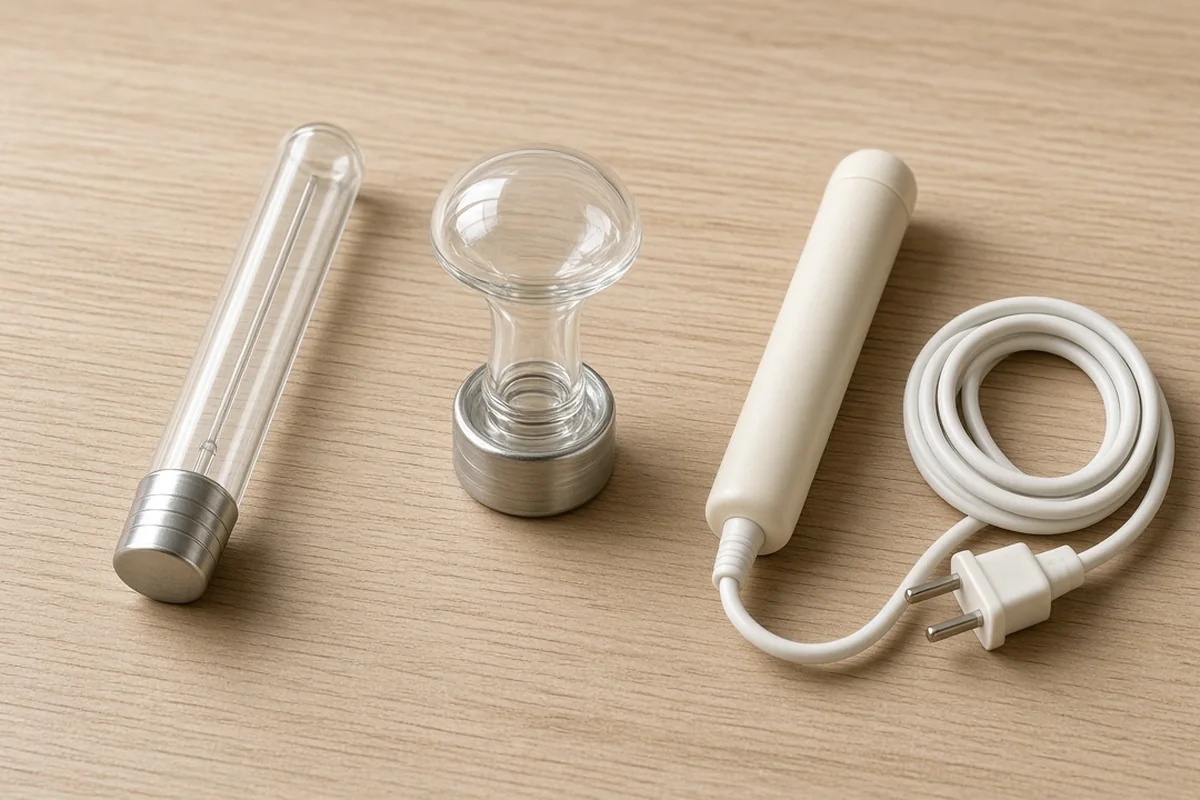
- Electrode: the glass attachment that slots into the wand.
- Saturator: an electrode, usually a straight glass tube, that the client holds in the indirect method. It is not placed on the face.
- Mushroom, spot and comb: common direct electrode shapes. A mushroom has a broad, rounded head, a spot (or pointed) electrode has a small tip, and a comb has prongs for use through hair. Some kits add a flat, curved tongue shape. High frequency electrodes explained covers each shape; your device manual is the final word on which ones fit your wand and where each is meant to be used.
How does the direct method work at home?
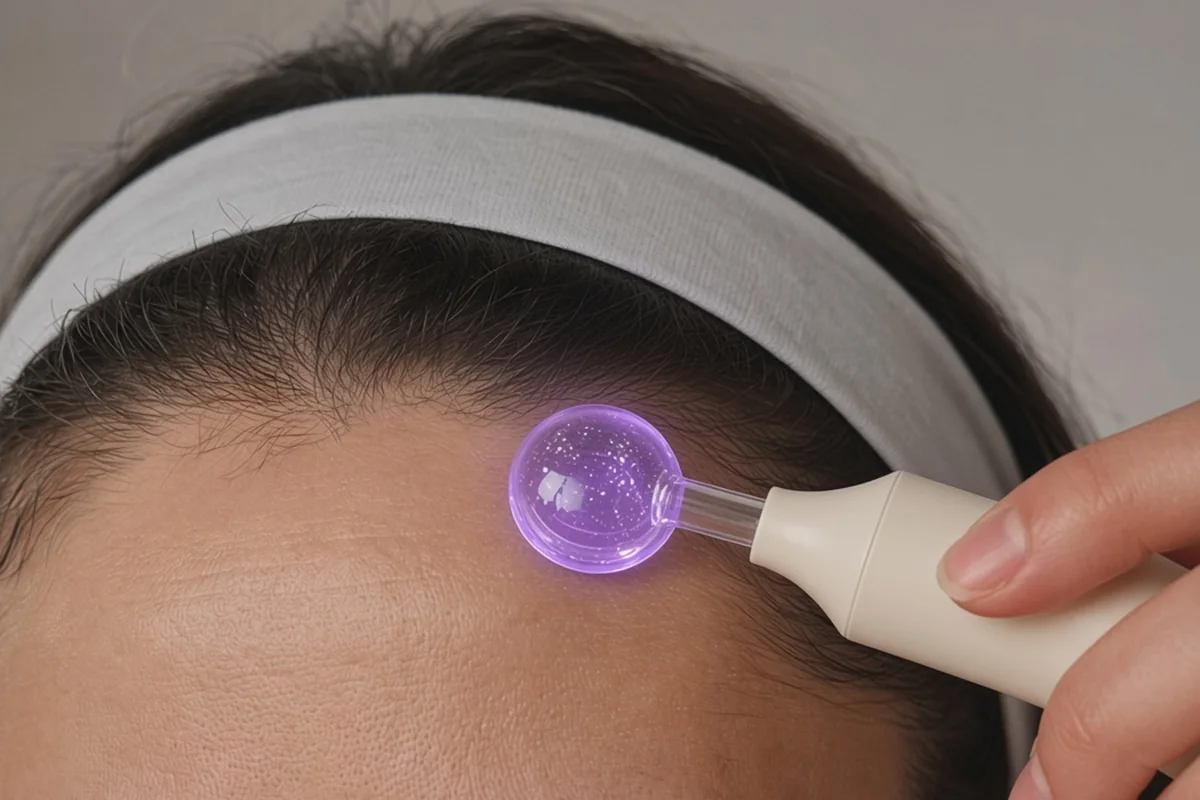
At home, you hold the wand yourself and glide a glass electrode over clean, dry skin. The NuDerma manual describes resting a fingertip on the base of the glass as you switch on and touch down, which helps avoid small static shocks. Keep the electrode in contact with your skin until the wand is switched off, because lifting it makes small sparks. Here is the method in plain words:
- Start with clean, completely dry skin, with nothing alcohol-based or flammable on it (see what to put on your skin before and after high frequency).
- With the wand off, fit an electrode that your manual lists for your device, holding the glass just above the metal base, and check it for cracks or chips.
- Turn the dial to the lowest setting.
- Rest a fingertip on the base of the glass, switch the wand on, then touch the glass down on your skin and lift your fingertip away.
- Keep the electrode moving in slow, steady strokes or small circles. Do not hold it in one place.
- Keep clear of the direct eye area, eyelids and lips, which the NuDerma manual says to avoid.
- Keep the session short: the NuDerma manual sets a maximum of 5 minutes every other day, with no more than 10 to 15 seconds on any one area. How often to use a high frequency wand has a sample week.
- Switch the wand off before lifting the electrode away from your skin.
- Unplug the wand, then clean the electrode the way your manual describes and let it dry fully before the next use.
For each step in detail, including cleaning and troubleshooting, read how to use a high frequency wand at home.
How does the indirect method work in a salon?
In a salon, the client holds the saturator and the practitioner massages the client’s face with their fingertips while the machine is on. The current passes from the saturator, through the client, and out through the practitioner’s fingers where they touch the skin. The practitioner never holds the electrode against the face.
Salons tend to follow a set of common conventions for this. They are working practices, not proven effects:
- Unbroken contact. The practitioner places their hands on the client’s skin before the machine is switched on or turned up, keeps at least one hand on the skin throughout, and turns the machine down or off before lifting their hands. Breaking contact while it is on can cause a spark or a small jolt.
- Jewelry off. Both the client and the practitioner remove rings, bracelets and other jewelry.
- No metal contact. The client is positioned so they are not touching metal, such as a chair frame.
- No flammable products. The practitioner uses a cream or massage product, not anything alcohol-based.
Why is the indirect method salon-only?
The indirect method is built around two people: one holding the saturator and a trained practitioner making and keeping contact with their skin. Holding the saturator and touching your own face does not reproduce the salon technique. At home, use only the direct method.
Some home kits include a saturator, which can make the indirect method look like a home option. It is not: leave the saturator in the case.
What about doing it on a partner or friend?
No. If the person massaging lifts their hands while the machine is on, the person holding the saturator may feel a spark or a jolt. Jewelry and metal contact add risk, the current passes through the massaging person’s hands too, and keeping steady contact while adjusting the intensity takes practice. If the indirect method appeals to you, book it with a licensed esthetician (US) or qualified beauty therapist (UK) who offers it.
How does each method feel?
People describe the direct method as a tingling sensation, sometimes with small sparks if the electrode lifts from the skin. People describe the indirect method as a gentler warmth during massage. These are reports from users and salon clients, not proven differences.
Direct: tingling, a faint buzz and sometimes small sparks
Many users describe a light tingling where the electrode touches the skin, plus a faint buzz from the wand. Some notice a fresh, sharp smell often described as ozone. Ozone has antimicrobial properties in lab settings; whether a home wand does this on skin is not well studied. A wand makes only a small amount, but ozone irritates the lungs when inhaled (EPA), so use it in a well-ventilated room, and ask your doctor first if you have asthma or another breathing condition.
If the electrode lifts slightly, the current can jump the gap as a small spark, felt as a tiny zap. This is why the electrode stays in contact with your skin while the wand is on, and why nothing alcohol-based or flammable should be on your skin.
Indirect: described as a gentle warmth
Clients often describe a mild warmth under the practitioner’s fingers rather than the sharper tingle of a glass electrode, while the saturator glows in their own hand. If contact breaks, they may feel a small zap.
When the feel is a warning sign
The feel varies with the setting, the device and the skin. Stinging, burning or pain is not something to push through: switch the device off, unplug it and stop.
Does one method work better than the other?
There is not enough evidence to say. Published research on high frequency for home use is limited, and studies comparing the direct and indirect methods are hard to find.
Keep the claims separate. Device brands say the direct method may help skin look clearer; that is the brand’s claim. Salons describe the indirect method as relaxing; that describes an experience, not a measured result. Research specific to either method at home is scarce.
Whether high frequency does anything measurable at all is a bigger question, and the evidence for high frequency facials is thin. For specific concerns, read high frequency for skin concerns: what it can and cannot do. In practice, the choice comes down to setting: the direct method at home, and either in a salon, depending on what the practitioner offers.
Who should not use either method?
The same exclusions in the safety box apply to both methods. With the indirect method, the practitioner should check the list for themselves too, since the current passes through their hands.
The full list, with reasons, is in who should not use a high frequency wand. For sparks, cords and flammable products, read is a high frequency wand safe to use at home?
For ongoing acne, rosacea, sensitive skin or any skin concern that worries you, see a board-certified dermatologist before trying either method. The American Academy of Dermatology explains what board certification in dermatology means and how to find a certified dermatologist. For how this site approaches health information, see the medical disclaimer.
For a broader introduction to the device, start with the high frequency facial at home overview.
FAQ
Can I do indirect high frequency on myself?
No. The indirect method needs a trained practitioner touching your skin while you hold the saturator, and holding the saturator while touching your own face does not reproduce the salon technique. At home, use only the direct method, as your manual describes.
Which method do home high frequency wands use?
At home, use only the direct method, with a glass electrode gliding over the skin. Your device manual is the final word on which electrodes fit your wand and how to use them.
Is indirect high frequency gentler than direct?
People often describe the indirect method as a gentle warmth during massage and the direct method as tingling. These are reports, not proven differences, and studies comparing the two methods are hard to find.
Why does the practitioner keep their hands on the skin during indirect high frequency?
Keeping contact helps avoid sparks and small jolts. It is a common salon convention, along with placing hands on the skin before the machine is turned on, turning it down or off before lifting the hands, removing jewelry and avoiding contact with metal.
Does direct or indirect high frequency give better results?
There is not enough evidence to say. Published research on high frequency for home use is limited, and studies comparing the direct and indirect methods are hard to find.
This article is for general educational purposes and is not medical advice.