The published evidence for home high frequency wands is limited, and most of it is small, older or lab-based rather than drawn from people using a wand at home. A wand may leave skin feeling refreshed and less oily for some people, but there is no good evidence that it clears acne, smooths wrinkles or fixes any other skin condition, so anything diagnosed belongs with a board-certified dermatologist.
Safety first: Do not use a high frequency wand if you have a pacemaker or any implanted electronic device, are pregnant, have epilepsy or a heart condition, or on broken, infected or inflamed skin. Do not use it in or near areas with metal implants, dermal fillers or other injectables. Use a water-based serum only if your manual suggests one, and keep the wand away from oil-based, alcohol-based or flammable products, because it can spark. This guide is educational, not medical advice. For ongoing acne, rosacea or other skin concerns, see a board-certified dermatologist.
Salons have used high frequency wands for decades as one step in a longer facial, and home versions now sell widely online. For the basics of the device, start with high frequency facials at home. The question here is narrower: what happens when you use one, what the marketing says, and how much of that holds up.
How does a high frequency wand work?
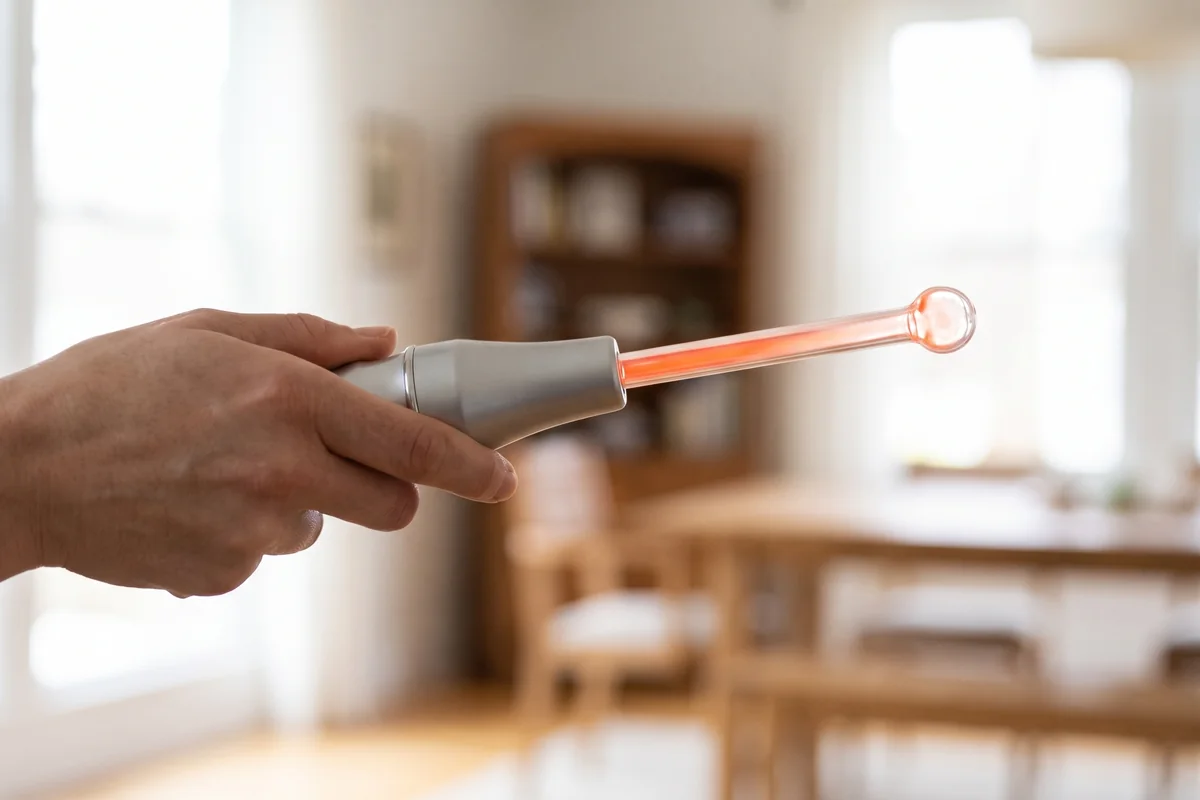
A high frequency wand sends a low-current, high-frequency electrical charge through a sealed glass electrode filled with a small amount of gas, usually argon or neon. When the glass touches your skin, the gas glows, you feel a light tingle and mild warmth, and a little ozone forms at the surface.
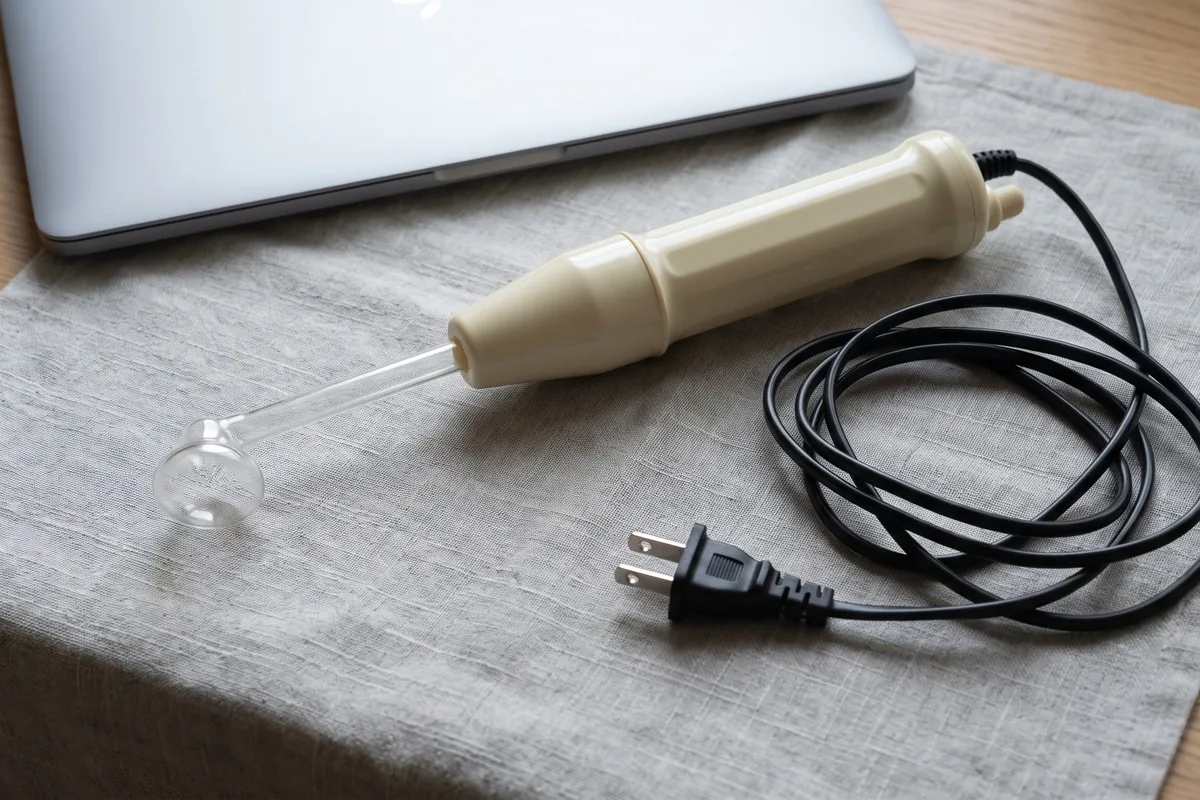
In plain terms, the parts are:
- The handle. It holds the circuit and a dial to adjust intensity.
- The electrode. A glass tube that slots into the handle. Common shapes include the mushroom (a rounded head for cheeks, forehead and jaw), the spot or point (a narrow tip for small areas), the comb (sold for use through the hair on the scalp), the tongue or spoon (a flatter shape brands suggest for the neck and jawline) and the saturator (a rod held in the hand, explained below). High frequency electrodes explained covers each shape and where it is used.
- The gas. Argon is a noble gas that usually glows violet or blue-violet. Neon usually glows orange or pinkish orange. Brands and salons often pair argon with oily skin and neon with dry or mature skin. Those pairings come from tradition and marketing rather than head-to-head research, and argon versus neon explains what the glow color does and does not mean.
There are two ways to use a wand. In the direct method, the glass electrode glides over the skin. In the indirect method, a salon technique, the client holds the saturator while a trained professional massages the face with their fingers, and the current passes through the professional’s hands. At home, use only the direct method. Direct vs indirect high frequency explains both methods in more detail.
The tingle is the charge reaching the skin. The faint crackle, and sometimes a tiny spark, happens when the electrode lifts slightly off the skin and the charge jumps the gap, which is why a wand must stay away from alcohol-based or flammable products. The clean, sharp smell, a bit like the air after a thunderstorm, is ozone.
Ozone has antimicrobial properties in lab settings; whether a home wand does this on skin is not well studied. A wand makes only a small amount, but ozone irritates the lungs when inhaled (EPA), so use it in a well-ventilated room, and ask your doctor first if you have asthma or another breathing condition.
What do brands and salons claim a high frequency facial does?
Brands and salons often say a high frequency facial can help with breakouts, oiliness, the look of enlarged pores, puffiness, fine lines and dull skin. These are claims made by sellers and service providers, and most have not been checked in controlled trials on home wands.
Common claims on listings and salon menus include:
- Clearer-looking skin. Brands often say the ozone may help keep pores clear by reducing bacteria on the surface. As the next section shows, this rests mainly on lab findings on bacteria and ozone, not studies of wands on faces.
- Less shine. Sellers often describe the wand as drying or tightening, and some users say oily areas look less shiny afterwards.
- Firmer, smoother-looking skin. Some brands say the warmth and current may support circulation or collagen. These are brand statements, not measured results from home devices.
- Less puffiness. Salons sometimes present the wand as a finishing step that leaves skin looking calmer and less puffy.
- Scalp and hair. Comb electrodes are sold with claims about the scalp and hair. Anyone worried about thinning hair or hair loss should see a board-certified dermatologist, since hair loss has many possible causes that need a proper diagnosis.
What does the research actually show?
Controlled human trials on home high frequency wands are scarce, and little of the evidence below tells you much about a consumer wand used for a few minutes at home.
The evidence that exists tends to fall into a few groups:
- Lab studies on bacteria. A 2018 lab study found that a professional high frequency unit reduced the growth of two types of bacteria in dishes, but only at higher intensities and with much longer exposure on one spot than a home session uses (PMC). A dish of bacteria is very different from living skin, and how much ozone a home wand produces on a face has not been well measured.
- One small study on wrinkles. A 2024 study of 26 adults aged 50 to 60 who received high frequency treatment for eight weeks reported better wrinkle scores, but it had no control group, and the authors called for future studies with control groups and objective measures (PubMed). Participants were treated rather than using a wand on themselves at home.
- Research on cold atmospheric plasma. Some writers link high frequency wands to studies on cold atmospheric plasma, a related technology studied with specialized research devices. Results from those devices cannot simply be carried over to a home wand with a different output, design and session time.
- Older esthetics practice. High frequency has been part of salon facials for a long time and appears in esthetics training. That shows it is familiar, not what the wand adds on its own.
- Brand material. Some brands cite user surveys or in-house trials, which are hard to judge without independent publication and a comparison group.
What is missing is a study that answers the question directly: a reasonably large group using a home wand for several weeks, compared with a group using a sham device that looks and feels the same, with skin assessed by people who do not know who used which. Without that, nobody can say whether a change comes from the wand or from everything else happening at the same time.
None of this proves a wand does nothing. It means the honest answer for most claims is “not known”, so a wand is best treated as an optional extra.
For a concern-by-concern look at breakouts, oiliness, fine lines and puffiness, read what high frequency can and cannot do for skin concerns.
Why do people feel a difference after a high frequency facial?
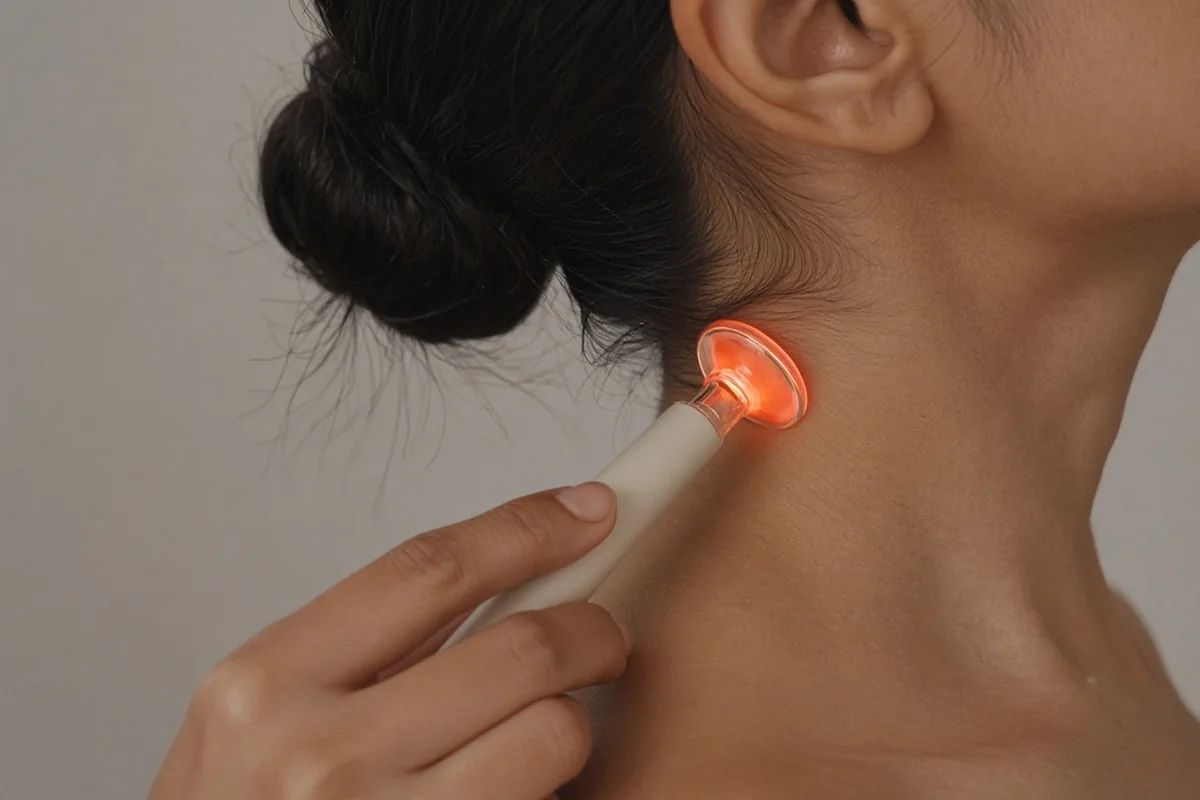
Many people say their skin feels fresher, warmer or less oily after a session, and that is believable even with thin evidence. Several things happen at once, and most would make skin feel different with or without the wand.
- Warmth and tingle. Sensation is persuasive. A gentle buzz on the skin feels like something is working, even when the visible change is small.
- A brief flush. Mild warmth and light gliding can leave skin looking a little pink and awake for a short while. That fades.
- The routine around it. A session usually starts with cleansing and ends with moisturizer. Clean skin and a well-chosen moisturizer can change how skin feels on their own. What you apply before and after also matters for safety, covered in what to put on your skin before and after high frequency.
- Attention. A few minutes set aside for your skin often means gentler handling and less touching or picking.
- Timing. Mild breakouts come and go. If you start a new device during a calm stretch, it is easy to give the device the credit.
The “less oily” feeling right after a session is real as a feeling. Whether it reflects any lasting change in how much oil skin produces has not been shown.
If you decide to try a wand, the settings, session lengths and cleaning steps from device manuals are set out in how to use a high frequency wand at home. The NuDerma manual, for example, limits sessions to a maximum of 5 minutes every other day. General safety at home is covered in is a high frequency wand safe to use at home?.
Who should not bother, or should ask first?
Some people should not use a wand at all, and others should check with a doctor before trying one. The full list is in who should not use a high frequency wand, and it is worth reading before you buy rather than after.
Beyond medical reasons, a wand is probably not worth your time or money if:
- You hope it will deal with a skin condition. Cystic acne, rosacea, an active skin infection and hair loss need a board-certified dermatologist, not a home gadget.
- Your skin is very sensitive. Extra friction, warmth and current can add irritation, so ask a dermatologist first.
- You want it to replace the basics. Gentle cleansing, moisturizer and daily sunscreen have far more behind them than any home wand.
- You expect visible changes in days. Even fans of the wand tend to describe subtle, short-lived effects.
When to see a dermatologist instead
See a board-certified dermatologist if you have acne that keeps coming back or leaves marks, painful lumps under the skin, persistent redness or flushing, a rash or patch that is spreading or not settling, signs of infection, or hair shedding or thinning. A dermatologist can work out what is going on and recommend options with much stronger evidence behind them than a home wand. You can search for one near you with the American Academy of Dermatology’s Find a Dermatologist tool.
Is a high frequency facial worth trying?
It can be worth trying if you are healthy, have none of the conditions that rule a wand out, enjoy skincare rituals and are happy with a cosmetic extra that may leave your skin feeling refreshed. It is not worth trying as a fix for a skin condition, or as a reason to put off seeing a dermatologist.
The wand is a small add-on with modest, uncertain effects, wrapped in a routine (cleansing, moisturizer, a few calm minutes) that has value of its own. Expect a pleasant sensation and skin that may feel less oily for a while, not clearer skin or fewer lines because a listing promised them.
A wand is optional, and nothing about your skin depends on owning one. For how to read health information on this site, see the medical disclaimer.
FAQ
Does a high frequency facial work for acne?
There is no good evidence that a home wand clears acne. Some people find their skin feels less oily after a session, but acne that keeps coming back, leaves marks or forms painful lumps belongs with a board-certified dermatologist.
Is there any scientific evidence for high frequency facials?
There is limited evidence. Controlled human trials on home wands are scarce. Most of what exists is lab work on bacteria and ozone, one small 2024 wrinkle study with no control group, research on cold atmospheric plasma using specialized research devices, and long-standing salon practice.
Why does my skin feel different after using a high frequency wand?
Warmth, tingle, a brief flush, and the cleansing and moisturizer around the session can all make skin feel fresher. That feeling is real, but it is not the same as a measured, lasting change in your skin.
Is the ozone from a high frequency wand safe?
A wand makes only a small amount of ozone, but ozone irritates the lungs when inhaled. Use it in a well-ventilated room, and ask your doctor first if you have asthma or another breathing condition.
This article is for general educational purposes and is not medical advice.