
Use a high frequency wand only as often and for as long as your own wand’s manual allows, and treat that limit as a ceiling, not a target. The NuDerma user manual, a typical example, sets a maximum of 5 minutes per session every other day, with no more than 10 to 15 seconds on any one area, and says to start on the lowest setting for the first few uses.
Safety first: Do not use a high frequency wand if you have a pacemaker or any implanted electronic device, are pregnant, have epilepsy or a heart condition, or on broken, infected or inflamed skin. Do not use it in or near areas with metal implants, dermal fillers or other injectables. Use a water-based serum only if your manual suggests one, and keep the wand away from oil-based, alcohol-based or flammable products, because it can spark. This guide is educational, not medical advice. For ongoing acne, rosacea or other skin concerns, see a board-certified dermatologist.
Other brands may set different limits, so check your own manual first. NuDerma appears here only as a typical example, not a recommendation.
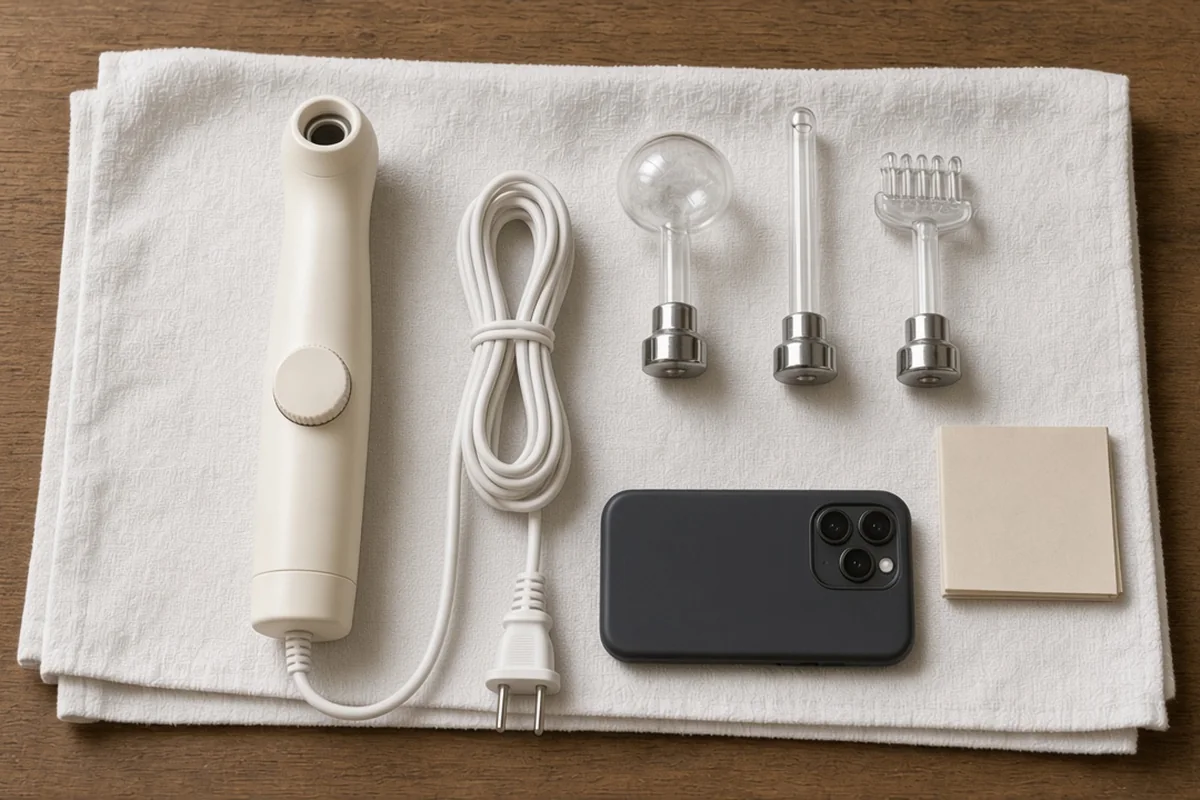
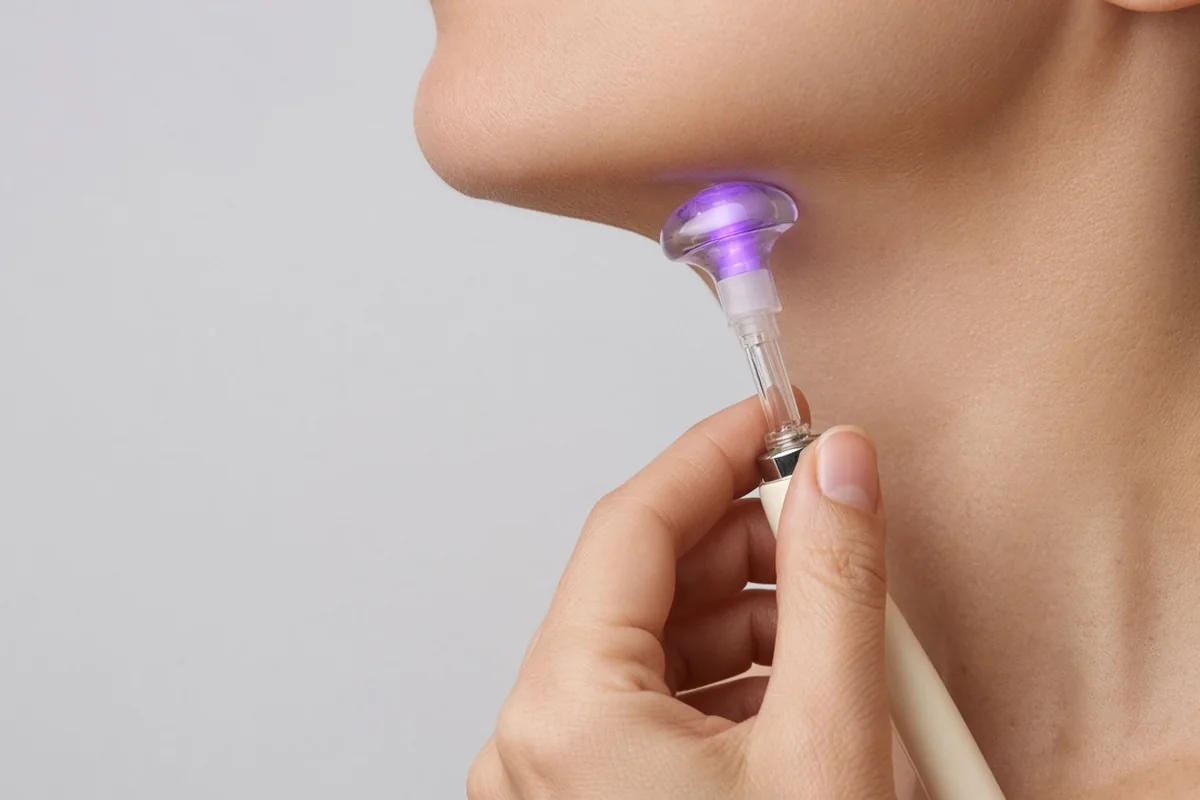
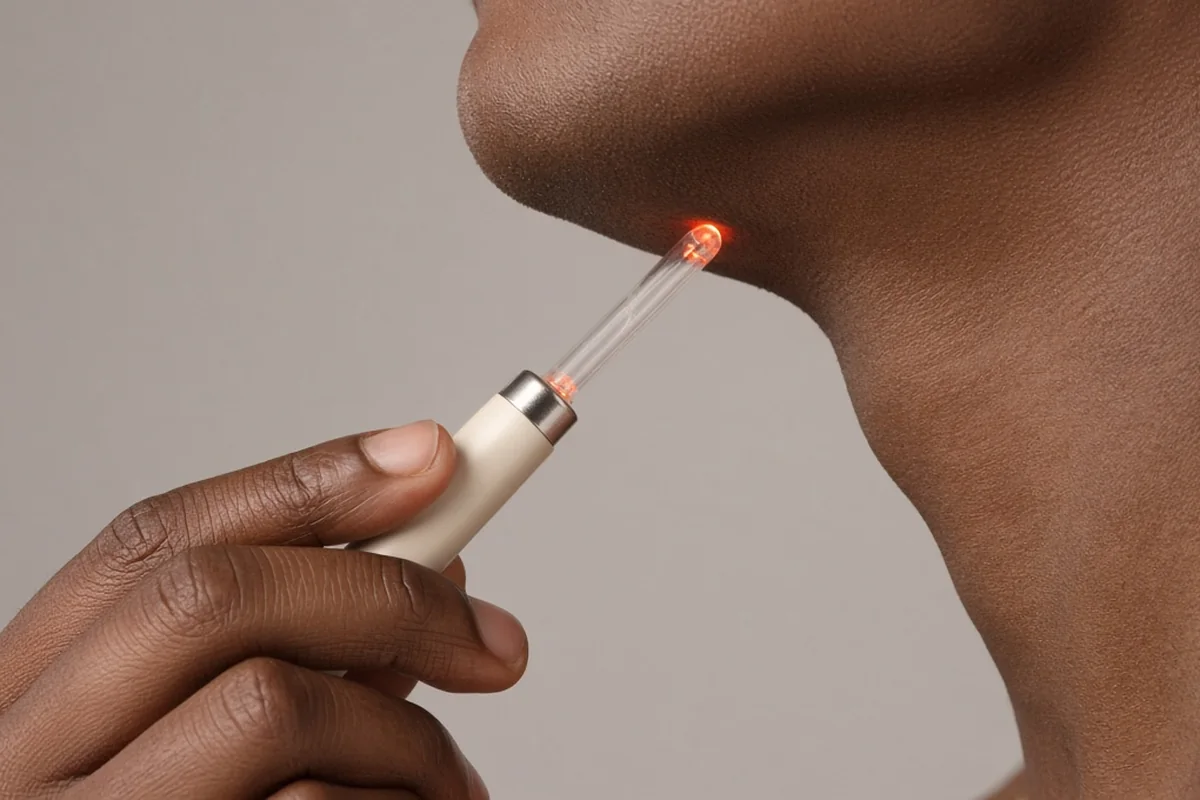
A high frequency wand passes a small current through a gas-filled glass electrode (the interchangeable tube): argon glows violet or blue-violet, neon glows orange-red. At home, use only the direct method, where the glass glides over your skin; the indirect method is a salon technique. For background, read what a high frequency facial at home is and what it can realistically do. For every step from fitting the electrode to switching off, follow the step-by-step guide to using a high frequency wand at home.
What you need
- Your wand’s manual. Its limits are the ones that apply to your device.
- A timer. A phone works, placed away from the work area where it stays dry.
- Clean, dry skin. Remove makeup and other products first, and apply a water-based serum only if your manual suggests one. The guide to what to put on your skin before and after high frequency covers product choices.
- A soft cloth and a little rubbing alcohol, to clean the electrode after a session, never for your skin. Follow your manual’s cleaning steps and let the glass dry fully before the next use.
Why is there a limit on how long you use it?
The limit protects both the device and your skin. The NuDerma manual says not to go past 5 minutes in a single session to preserve the gas inside the glass tubes, and to keep the wand moving rather than stopping on one area.
On the skin side, long sessions or glass held in one place raise the chance of irritation, such as redness or stinging. A full day off between sessions gives skin time to settle.
Evidence for at-home high frequency is limited, so the manual is the clearest guidance you have. For the wider safety picture, including what electrical safety marks can and cannot tell you, read whether a high frequency wand is safe to use at home.
What does “every other day” look like across a week?
Every other day means one session, then at least one full day off before the next. Over seven days that allows up to four sessions, and fewer is fine.
An example that never exceeds the NuDerma limit:
- Monday: session (5 minutes or less)
- Tuesday: rest day
- Wednesday: session
- Thursday: rest day
- Friday: session
- Saturday: rest day
- Sunday: session
- Next Monday: rest day, because Sunday was a session day
The pattern runs on from week to week rather than resetting each Monday, so sessions never land on two days in a row.
- Keep to one session per session day. Splitting the time into a morning and an evening session still adds up to two sessions on one day.
- If you miss a session day, carry on from the next planned day. Do not add the missed minutes to your next session.
- Using it less often, such as twice a week, also stays inside the limit.
How do you plan a short session across your face?
Split your face into a few areas and give each one no more than 10 to 15 seconds, with the glass moving the whole time, as the NuDerma manual sets out. The same manual says to avoid the direct eye area, eyelids and lips.
Four areas at 15 seconds each take about a minute, so you do not need to fill the 5-minute cap.
Once the wand is set up and switched on at the lowest setting, a session can run like this:
- Start the timer.
- Glide the glass over the forehead in small circles for no more than 10 to 15 seconds, staying well above the brows.
- Move to one cheek for 10 to 15 seconds, keeping below the eye area.
- Move to the other cheek for 10 to 15 seconds.
- Finish on the chin for 10 to 15 seconds, keeping clear of the lips.
- Switch the wand off before lifting the glass when every area is done, even if time remains on the timer.
Count any second pass over an area toward that area’s 10 to 15 seconds.
For a single spot, the manual describes brief taps with the spot electrode, or holding it on that spot for 2 to 3 seconds. Fit electrodes only with the wand off, use only tubes your manual says fit (NuDerma says official NuDerma tubes only), and hold the glass just above its metal base, never by the tip.
How should you time a session?
Set a phone timer for 5 minutes or less before you switch the wand on. Place it on a dry surface away from the work area, where you can hear it without reaching across the wand or cord, and keep your hands dry.
For each area, a slow count in your head keeps you within 10 to 15 seconds; the timer handles the overall cap. When it sounds, stop, even if some areas are left for the next session day.
When should you skip a session or stop early?
Skip any day your skin is broken, infected or inflamed, even if it falls on a planned session day. Stop at once, switch off and unplug if you notice any reaction the NuDerma manual lists: an allergic response, swelling, skin discoloration, extreme redness, hyperpigmentation or unusual pain.
If a reaction does not settle, or it comes back, stop using the wand and find a board-certified dermatologist. Rosacea, cystic acne and active skin infections also call for a board-certified dermatologist rather than a home wand routine.
Some conditions rule a wand out entirely, so check who should not use a high frequency wand first. The site’s medical disclaimer explains the limits of the information here.
Is longer or more often better?
No. There is no good evidence that going past a manual’s limits gives better-looking skin, and it raises the chance of irritation. For a realistic view of what the device may and may not do, see high frequency for skin concerns: what it can and cannot do.
Intensity is a separate question from timing. Changing the setting level does not change the session and per-area limits, and the manual says to start on the lowest setting for the first few uses whatever your schedule.
What if you have a darker skin tone?
Start lower and smaller than the limit allows. Irritation can leave post-inflammatory hyperpigmentation, darker patches that linger after skin inflammation, and DermNet notes it is more common in darker skin types.
Before using the wand across your face, start on the lowest setting on a small area. If redness or dark marks appear, stop and see a board-certified dermatologist.
What can go wrong, and how do you fix it?
You lose track of time and run over. Switch off and end the session there. If your skin looks red or feels sore, skip the next planned session until it has settled.
The glass stops on one spot. If you get distracted, keep the glass moving, or switch the wand off before you lift it. Starting the timer first means you never need to look away mid-session.
The wand flickers, buzzes louder than usual or stops glowing. Switch it off and unplug before inspecting it. Do not use a cracked or chipped electrode. Make sure the plug goes straight into a wall socket, with no extension cord, power strip, plug-in timer or voltage adapter. Do not stretch the next session to make up for lost minutes.
Skin reacts after several sessions. Stop using the wand, and if the reaction lasts, see a board-certified dermatologist before using it again.
FAQ
Can I use a high frequency wand every day?
Not if your manual says every other day, as the NuDerma manual does. Leave at least one full day off between sessions, and check your own manual, because other brands may set different limits.
Do I need to use the full 5 minutes?
No. Five minutes is the NuDerma manual’s maximum, not a target, and four areas at 15 seconds each take about a minute. Switch off when every area is done, even if time remains on the timer.
How long can I keep the wand on one area?
No more than 10 to 15 seconds per area under the NuDerma manual, with the glass moving the whole time. For a single spot, the manual describes brief taps with the spot electrode or 2 to 3 seconds in one place.
What if I miss a session day?
Carry on from the next planned day. Do not add the missed minutes to your next session, and do not use the wand on two days in a row to catch up.
This article is for general educational purposes and is not medical advice.