
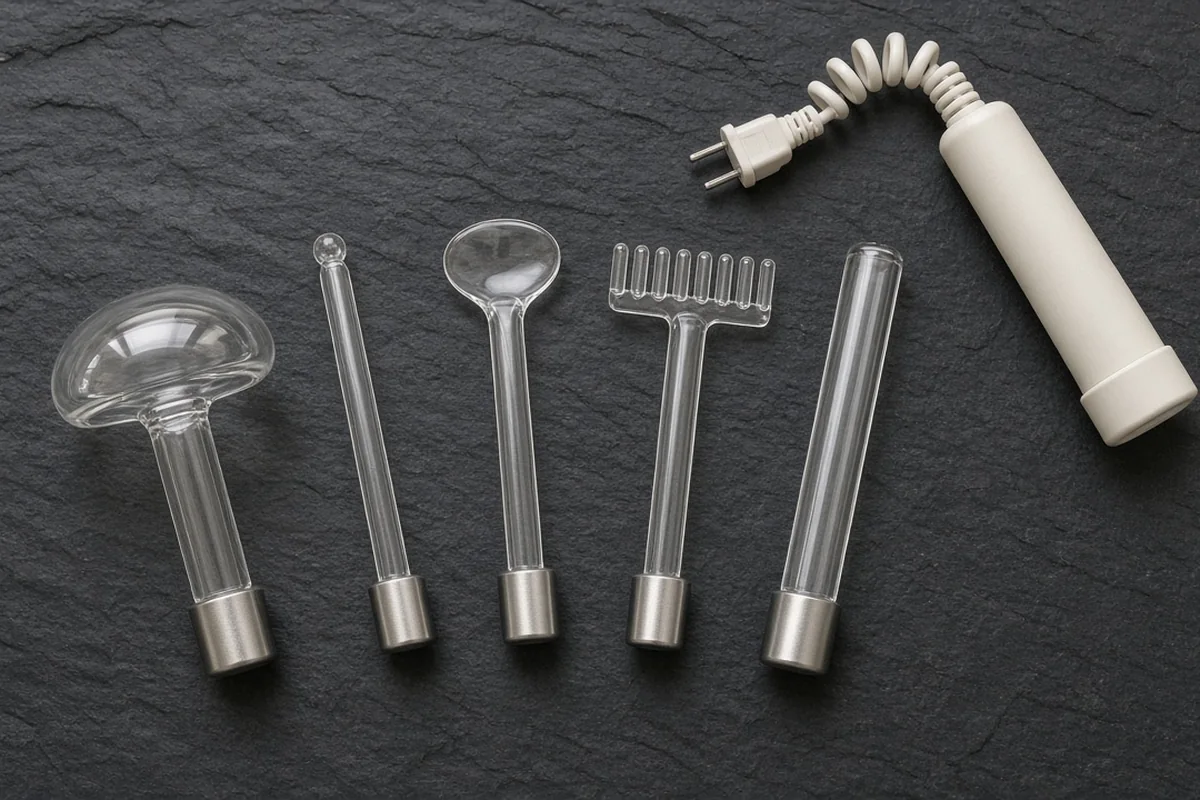
High frequency wands come with interchangeable glass electrodes, and each shape is meant for a different area: the mushroom for gliding over larger areas like the cheeks and forehead, the spot or pointed electrode for small single areas, the comb or rake for the scalp, and the spoon or tongue for contoured areas, while the saturator is a hand-held rod used only for the indirect method, a salon technique. The manual for your wand says which ones it includes and how each is used.
Safety first: Do not use a high frequency wand if you have a pacemaker or any implanted electronic device, are pregnant, have epilepsy or a heart condition, or on broken, infected or inflamed skin. Do not use it in or near areas with metal implants, dermal fillers or other injectables. Use a water-based serum only if your manual suggests one, and keep the wand away from oil-based, alcohol-based or flammable products, because it can spark. This guide is educational, not medical advice. For ongoing acne, rosacea or other skin concerns, see a board-certified dermatologist.
High frequency wand attachments are not standardized. Some kits include only a mushroom and a spot electrode, others add a tongue, a comb and a saturator, and names vary too: a “spoon” in one manual may be a “tongue” in another.
If you are new to these devices, start with how at-home high frequency facials work.
What is a high frequency electrode?
A high frequency electrode is the glass attachment that plugs into the wand and carries the current to your skin. It is a sealed glass tube with a small amount of gas inside and a metal or plastic base that fits into the wand’s socket. When the wand is on, the gas inside glows.
The gas is usually one of two:
- Argon, a gas that glows violet or blue-violet when the current passes through it.
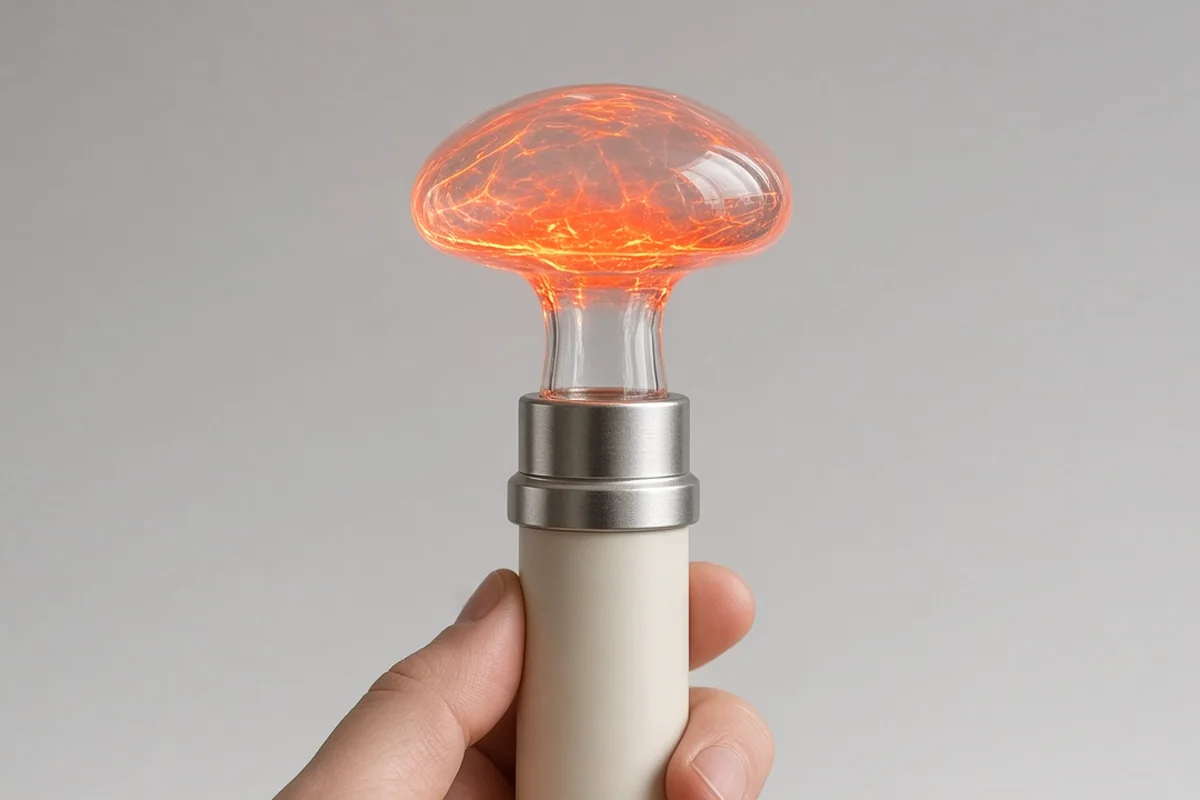
- Neon, a gas that glows orange-red, sometimes described as pinkish orange.
Brands and salons often link each color to different uses, but those links are conventions and marketing, not settled findings. Argon vs neon high frequency explains what each glow does and does not mean.
The shape changes where the glass touches you, not what the device can do. Evidence for at-home high frequency is limited; for an honest look at what it may and may not do for the look of skin, read what high frequency can and cannot do for skin concerns.
Which electrode shapes are most common, and what is each one for?
Five shapes turn up in most kits. The first four are used in the direct method, where the glass glides over your skin. The saturator is used in the indirect method, where the electrode never touches the face.
Mushroom electrode
The mushroom has a short neck and a wide, rounded or slightly flattened head. Its broad surface makes it the usual choice for gliding over larger, flatter areas such as the forehead, cheeks and chin.
Follow the movement pattern and session length in your manual. The NuDerma manual, for example, describes small circular motions, no more than 10 to 15 seconds on any one area, and a maximum of 5 minutes per session every other day. Keep it off the direct eye area, eyelids and lips, which the NuDerma manual says to avoid. If you have rosacea or very reactive skin, see a board-certified dermatologist before using any high frequency device.
Spot or pointed electrode
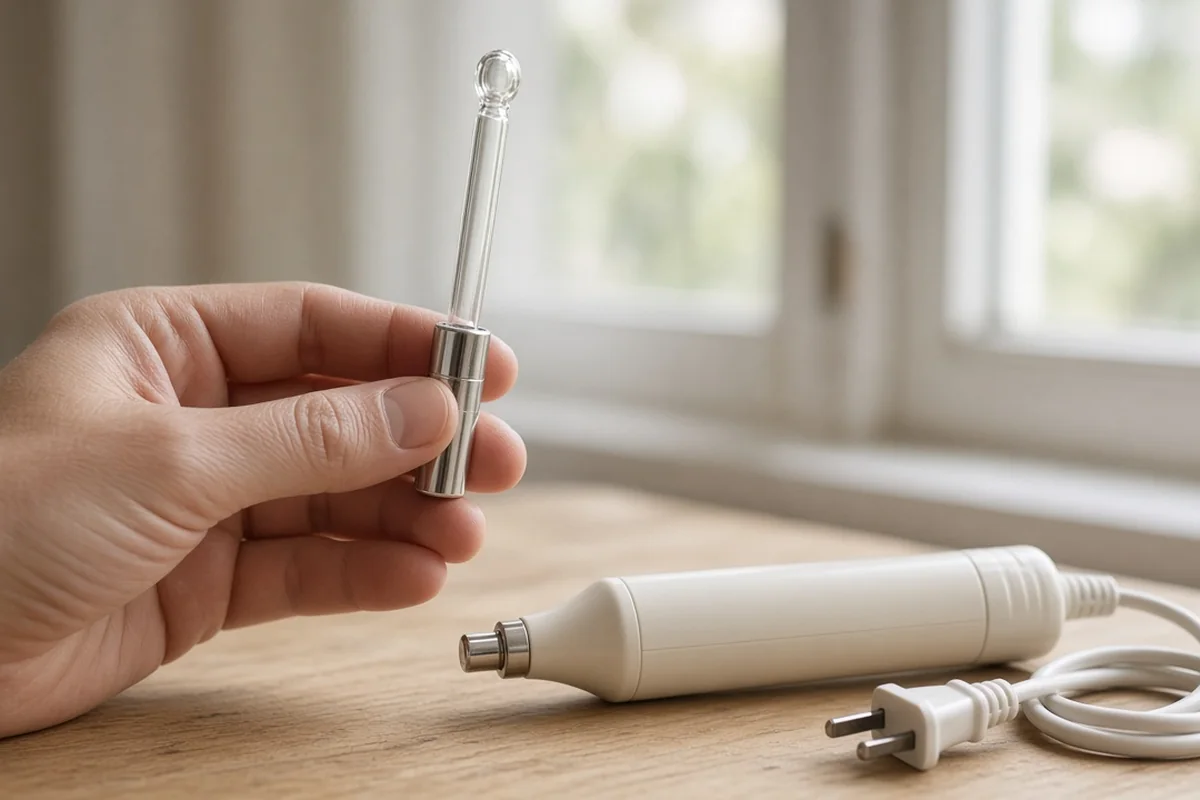
The spot electrode, also called a pointed electrode, narrows to a small rounded tip for a single small area, such as one blemish.
Contact should be brief. The NuDerma manual says you can tap a blemish several times with the spot tube or hold it there for 2 to 3 seconds, then move on. Never use it on a spot that is broken, picked, crusted or inflamed. For cystic acne, or breakouts that keep coming back, see a board-certified dermatologist rather than relying on a wand.
Tongue or spoon electrode
This one has a flat or gently curved head, like the back of a spoon, meant to follow contoured areas such as the jawline, under the chin and the sides of the nose.
As with the mushroom, follow your manual on movement and timing. Keep it off the eye area; most manuals say to avoid it.
Comb or rake electrode
The comb, or rake, has a row of glass teeth that slide through hair so the glass can reach the scalp.
Use it on clean, completely dry hair only. Keep it away from hair products such as sprays, mousses, gels, dry shampoo and oils, because many styling products contain alcohol or other flammable ingredients and the wand can spark. Take out metal clips and pins first. If you are thinking about the comb because of thinning hair, hair loss or a scalp condition, see a board-certified dermatologist first; evidence for high frequency on the scalp is limited.
Saturator
The saturator is a glass tube (in some salon kits, a metal rod) that the person receiving the facial holds. It is used only for the indirect method: the current passes into the person holding it, and a practitioner massages the face with their fingertips, so the glass never touches the face.
In salons, the indirect method is carried out by a trained person, usually an esthetician. A common convention is that the practitioner keeps their fingertips on the client’s skin before the wand is switched on and until it is switched off, to avoid sudden sparks. At home, use only the direct method, so if your kit includes a saturator, leave it in the case. Direct vs indirect high frequency explains why the indirect method is a salon technique.
Other shapes you may see
Some kits include extra shapes under their own names. If an electrode is not described in your manual, do not guess how to use it; ask the brand or seller.
How do you insert and remove an electrode safely?
Always switch the wand off before touching the socket, hold the glass just above the metal base, never by the tip, and never force it in or out. Check the glass for damage every time before you use it.
Work with dry hands on a dry, stable surface away from sinks and water. To insert an electrode:
- Switch the wand off, turn the intensity dial to its lowest setting, and unplug it if it is corded.
- Hold the electrode up to good light and check it for cracks, chips or hairline fractures, especially where the glass meets the base.
- Hold the glass just above its metal base, as close to the wand as you can, never by the tip.
- Line the base up with the socket and push it in gently until it sits firmly, as your manual describes. Push it straight in, not at an angle, as the NuDerma manual describes.
- Stop if it does not slide in easily. Forcing it can crack the glass or damage the socket.
To remove an electrode:
- Switch the wand off and unplug it if it is corded.
- Give the glass a moment to cool if it feels warm.
- Hold the glass just above the metal base and lift it straight out gently, never at an angle.
- If it feels stuck, do not twist hard or pry it. If glass breaks inside the socket, the NuDerma manual says not to remove the pieces yourself and to contact its support team.
When should you stop using an electrode?
Stop using an electrode as soon as you see a chip, crack or loose base. Damaged glass can cut skin, and a cracked tube can let air in, which changes how the gas glows.
Other signs that something is wrong:
- The electrode no longer glows, glows weakly or flickers.
- The glow color looks different from when it was new.
- The base feels loose in the socket, or you hear crackling at the socket rather than at the skin.
Unplug the wand before you inspect anything, and never repair glass with glue or tape. For a wider look at device safety, read whether a high frequency wand is safe to use at home.
Do electrodes from one brand fit another wand?
Not reliably. Only use electrodes that your manual says fit your wand; the NuDerma manual, for example, says to use only NuDerma’s official tubes.
Base sizes and socket designs vary between brands and sometimes between models from the same brand. An electrode that looks right can sit loosely, which may cause flickering, sparking at the socket or poor contact. Unlisted parts may also affect your warranty. For replacements, go to the brand that made your wand, or choose one whose listing names your exact model and matches your manual. What to look for in a high frequency wand covers replacement tubes and the other buying checks.
How should you store high frequency electrodes?
Store electrodes clean, completely dry and in a padded case, ideally the one they came in. Loose glass rolling around a drawer chips easily.
- Clean each electrode after use as your manual describes. The NuDerma manual says to switch off and unplug first, wipe the tubes with a soft cloth and a small amount of rubbing alcohol, and make sure the glass is completely dry before storing or using it again.
- Keep the case away from the sink, bath, shower and direct heat.
- Store the wand switched off and unplugged, with the cord loosely coiled.
- Keep the kit out of reach of children.
Before your first session, read how to use a high frequency wand at home for settings and timing, and what to put on your skin before and after high frequency for products to keep away from the glass. If you have any health condition, read who should not use a high frequency wand first. The site’s medical disclaimer explains how to use the information here.
FAQ
What are the attachments on a high frequency wand called?
They are called electrodes. Each one is a sealed glass tube with a small amount of gas inside, usually argon or neon, and a base that plugs into the wand.
Can I use the comb electrode on wet hair?
No. Use the comb on clean, completely dry hair only, and keep it away from hair products, because many contain alcohol or other flammable ingredients and the wand can spark.
Can I use electrodes from a different brand?
Only if your manual says they fit. Base sizes and socket designs vary, and a loose fit may cause flickering, sparking at the socket or poor contact.
Is it safe to use a chipped electrode?
No. Stop using an electrode as soon as you see a chip, crack or loose base, because damaged glass can cut skin and a cracked tube can let air in.
What is the saturator used for?
It is used only for the indirect method: the person receiving the facial holds it while a trained practitioner massages the face with their fingertips. It is a salon technique, so at home, use only the direct method and leave the saturator in the case.
This article is for general educational purposes and is not medical advice.