
Choose a high frequency wand on safety and practicality first and on marketing claims last. Check for an electrical safety listing such as UL or ETL (CE or UKCA in Europe and the UK), a clear manual with contraindications (reasons not to use it) and session limits, an electrode set that suits the areas you plan to use it on, replacement electrodes from the same brand, a written warranty and return policy, and corded vs cordless to fit how you will use it.
Safety first: Do not use a high frequency wand if you have a pacemaker or any implanted electronic device, are pregnant, have epilepsy or a heart condition, or on broken, infected or inflamed skin. Do not use it in or near areas with metal implants, dermal fillers or other injectables. Use a water-based serum only if your manual suggests one, and keep the wand away from oil-based, alcohol-based or flammable products, because it can spark. This guide is educational, not medical advice. For ongoing acne, rosacea or other skin concerns, see a board-certified dermatologist.
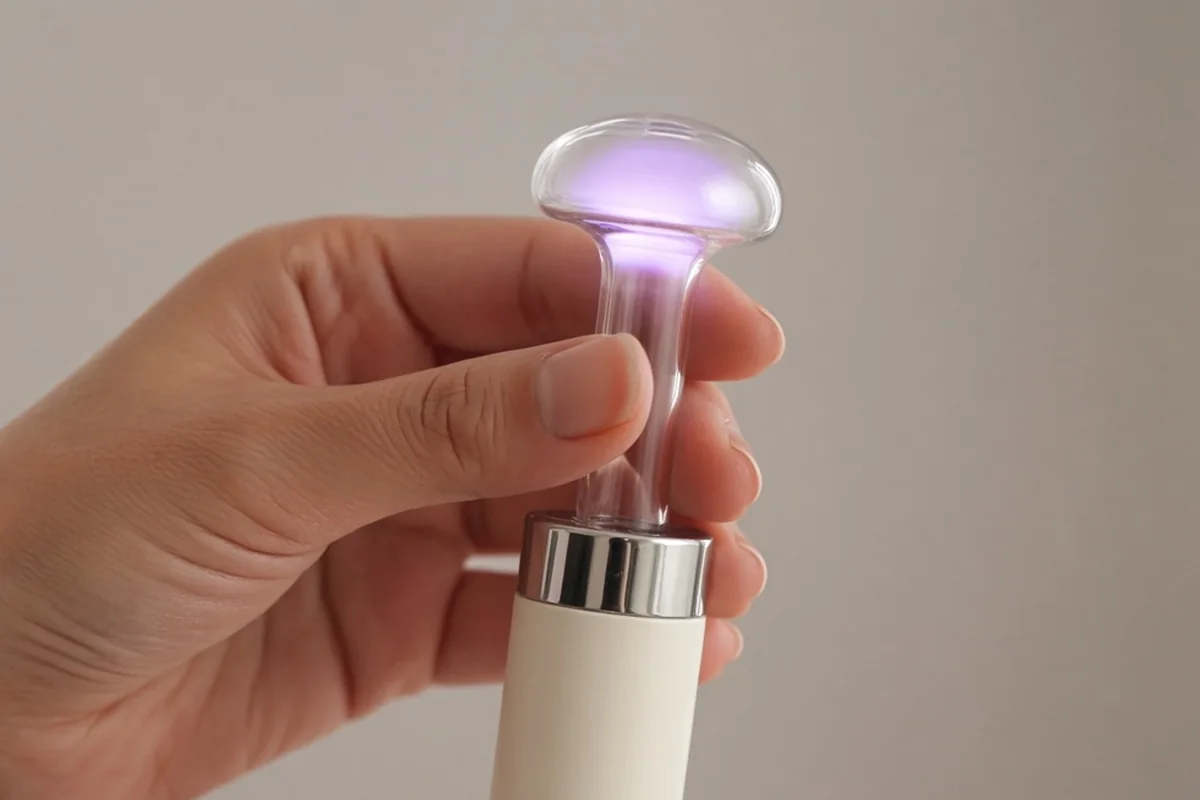
A high frequency wand sends a low-level electrical current through a gas-filled glass electrode, the attachment that touches your skin. If the device is new to you, start with what a high frequency facial at home is and what it can realistically do.
Is a high frequency wand worth buying at all?
Buying one is a cosmetic choice, not a fix for a skin condition. Evidence for at-home high frequency is limited, and most claims about results come from brands rather than published research. A wand is optional.
Sessions are also short and spaced out by design. The NuDerma manual, a typical example rather than a recommendation, limits sessions to a maximum of 5 minutes every other day, with no more than 10 to 15 seconds on any one area. Before you spend anything, read what high frequency can and cannot do for skin concerns. For ongoing acne, rosacea or other skin concerns, find a board-certified dermatologist instead.
What should you check before buying a high frequency wand?
Run every wand through these ten checks. If you are comparing lists of the best high frequency wands, the same checks apply to every pick.
1. A recognized safety listing on the device, plug or charger
What to check: In the US, the useful electrical safety listing is UL or ETL. CE or UKCA, used in Europe and the UK, is a maker’s declaration and often self-assessed. FCC covers radio interference, not shock safety.
Where to find it: On the device, plug or charger, and named in the manual. A logo in listing photos is not enough.
Red flag: A mark shown only in listing graphics, or an FCC logo presented as a safety mark. No mark guarantees safety, and marks can be copied onto cheap listings. For what each mark means, read whether a high frequency wand is safe to use at home.
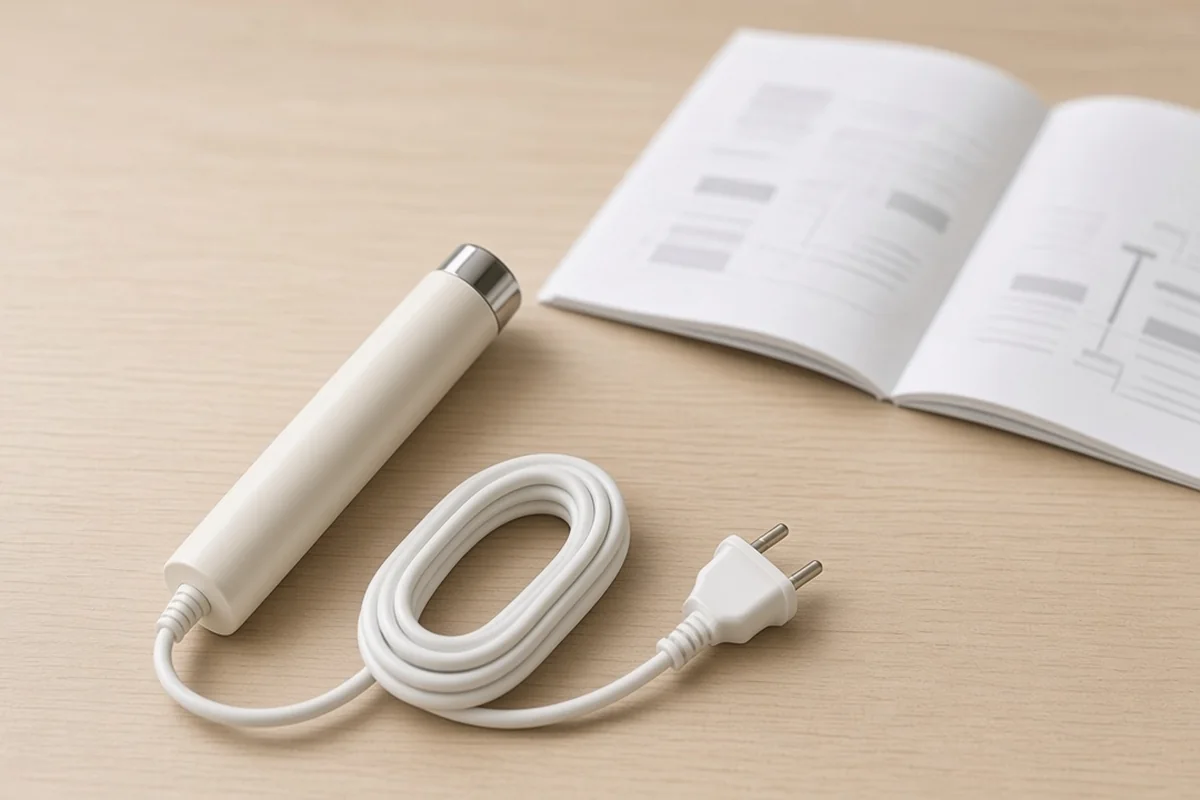
2. A full manual you can read before you buy
What to check: Warnings, who should not use the device, a session limit, a beginner setting, cleaning steps and any age guidance.
Where to find it: The brand’s website, the listing, or support (ask for a PDF before ordering). The NuDerma manual is public and shows what a complete one contains: warnings that include implanted electronic devices, pregnancy, epilepsy and heart conditions; a beginner level of 1 or 2; the 5-minute session limit; and cleaning with a soft cloth and a little rubbing alcohol, then drying the glass completely (NuDerma manual).
Red flag: No manual, a leaflet with no warnings, or a manual that reads like an ad.
3. An electrode set that matches your plans
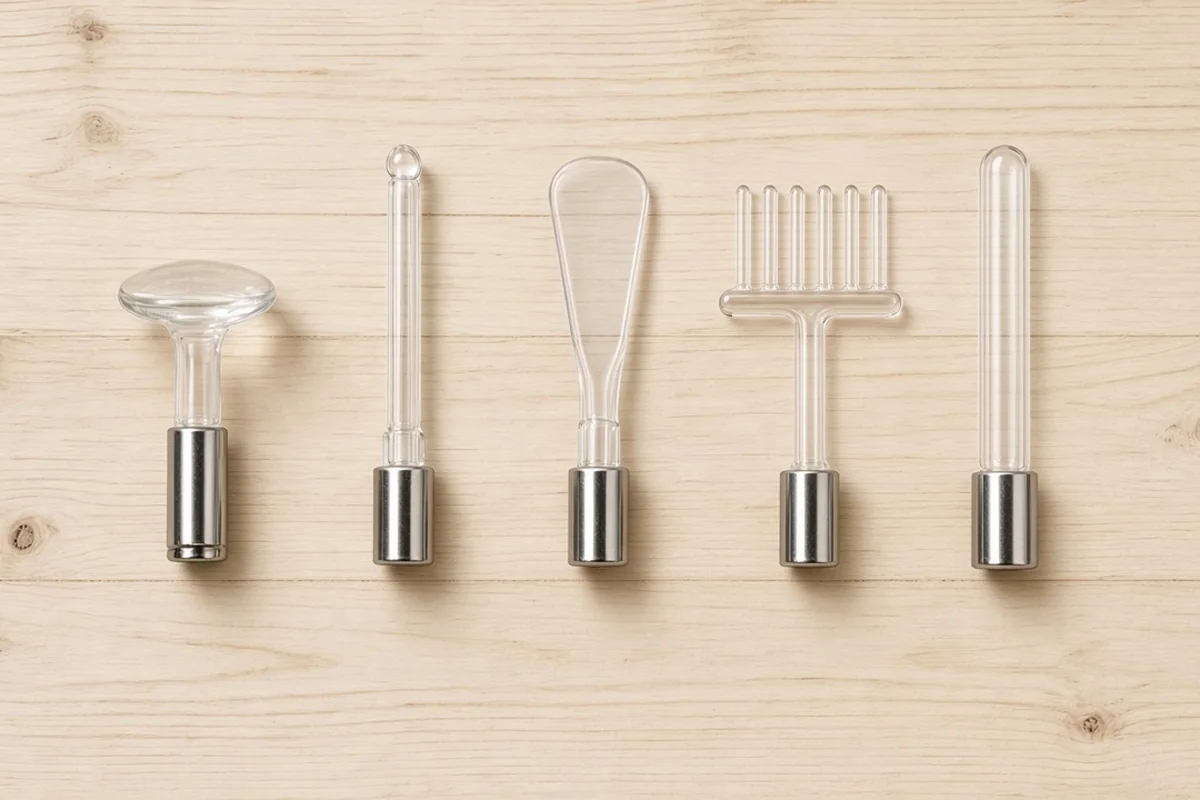
What to check: Each electrode is a glass shape on a metal base. At home, use only the direct method, where the electrode glides over your own skin. The indirect method, where a client holds an electrode while a practitioner massages the face, is a salon technique. The common electrode shapes:
- Mushroom: a rounded head for larger areas such as the cheeks, forehead and jaw.
- Spot: a narrow tip for small areas, such as a single blemish.
- Tongue or spoon: a flat, curved head that follows contours like the jawline.
- Comb: glass teeth for the scalp. For thinning hair or hair loss, see a board-certified dermatologist first.
- Saturator: a rod the client holds in the salon indirect method. A home user does not need it.
Where to find it: The listing’s “what’s in the box” section and the manual, which should say what each electrode is for.
Red flag: Attachments with no explanation of use, or a saturator sold as essential for home.
4. Argon or neon tubes
What to check: Argon tubes glow violet or blue-violet, and neon tubes glow orange-red. Sellers often pair violet with oily or breakout-prone skin and orange with drier or mature skin; that is a convention, with little published evidence either way. Argon vs neon high frequency compares the two in more detail.
Where to find it: The listing description, which should name the gas.
Red flag: A listing that presents one color as proven to work better.
5. Replacement tubes from the same brand
What to check: Glass breaks, so look for replacement tubes from the same brand, made for your model, and read what the manual says about third-party tubes. The NuDerma manual says to use official NuDerma tubes only, and that non-approved third-party tubes void the warranty and could damage the device (NuDerma manual).
Where to find it: The brand’s site and the warranty wording in the manual.
Red flag: No replacements sold anywhere, or “universal” tubes with no fit information. Use only electrodes the manual says fit. When you swap one, hold the glass just above the metal base, never by the tip, and never force it in.
6. An intensity dial with a clear lowest setting
What to check: A dial with a clearly marked minimum. The NuDerma manual says to use the lowest setting for the first few uses.
Where to find it: Product photos and the setup section of the manual.
Red flag: No dial, no marked minimum, or a single fixed output. A good manual also gives the switch-on order: fit the electrode with the wand off, plug straight into a wall socket, turn the dial to the lowest setting, rest a fingertip on the base of the glass, switch on, then touch down. That matches the steps in how to use a high frequency wand at home.
7. Power that suits how you will use it
What to check: Corded vs cordless comes down to where and how you will use it. A corded wand needs a plug that goes straight into a wall socket and a voltage rating that matches your country; the NuDerma manual rules out extension cords, power strips, timers and voltage adapters. A cordless wand needs clear charging and battery guidance in its manual.
Where to find it: The rating label on the device or charger, the manual’s specifications, and the listing. If you are buying in the UK, check for a UK plug and a rating that covers UK mains.
Red flag: A plug that only fits your sockets with an adapter, no stated voltage, or no charging instructions.
8. A real brand name and a working support contact
What to check: A brand you can look up, with a website and a support email or phone number. The NuDerma manual, for example, gives a support email for damaged cords, stuck tubes and faults.
Where to find it: The manual and the brand’s site. One short question before you buy shows whether anyone answers.
Red flag: A seller name made of random letters, no website, or a contact that never replies.
9. A written warranty and a return policy
What to check: How long the warranty lasts, what it covers, what voids it and how to claim, plus the return window and who pays return shipping.
Where to find it: The listing and the brand’s site, readable before you pay. If cost matters, check the current listing.
Red flag: “Warranty included” with no terms, or no return policy.
10. Listing red flags
Walk away from a listing with any of these:
- Cure or treatment claims for acne, wrinkles or any skin condition, or phrases such as “clinically proven” or “medical grade”.
- Before and after photos.
- No brand name.
- No manual.
- No safety mark on the device, plug or charger.
- Attachments with no explanation of how to use them.
Who should skip buying a wand?
Skip it if anything in the safety box applies to you, including an implanted electronic device, pregnancy, epilepsy, a heart condition, or metal implants, fillers or injectables in the area. The full list is in who should not use a high frequency wand.
For rosacea, cystic acne, an active infection or hair loss, see a board-certified dermatologist rather than buying a device. For teens, check the manual’s age limits and involve a parent; a wand is never a substitute for seeing a doctor. The site’s medical disclaimer explains how to use this information.
What questions should you ask before you buy?
- Which safety mark is on the device, plug or charger?
- Can I read the full manual now?
- Which electrodes will I actually use?
- Can I buy replacement tubes for this model?
- Does the manual suggest a water-based serum, and do I know what to put on my skin before and after high frequency?
- What does the warranty cover, and can I return it?
Recap checklist
Copy this into your notes before you shop:
- Safety listing on the device, plug or charger.
- Full manual: warnings, who should not use it, session limit, beginner setting, cleaning.
- Electrodes for your planned areas (no saturator needed).
- Argon or neon, knowing the evidence is thin.
- Same-brand replacement tubes.
- Dial with a clear lowest setting.
- Wall-socket plug and matching voltage, or clear charging guidance.
- Real brand and support contact.
- Written warranty and return policy.
- No listing red flags.
FAQ
Is an argon or neon wand better?
Neither has strong evidence behind it. Argon glows violet or blue-violet and neon glows orange-red; matching violet to breakout-prone skin and orange to drier or mature skin is a convention.
Do I need a saturator electrode at home?
No. The saturator is held by the client in the salon indirect method. At home, use only the direct method.
Can I use cheaper third-party glass tubes?
Check your manual first. The NuDerma manual says to use official NuDerma tubes only, and that non-approved third-party tubes void the warranty and could damage the device.
This article is for general educational purposes and is not medical advice.