The color you see in a high frequency electrode comes from the gas sealed inside the glass: argon glows violet or blue-violet, and neon glows orange-red. Brands and salons commonly pitch violet argon for oily or breakout-prone skin and orange neon for drier or mature skin, but there is little published evidence that the gas color changes results, so it is best seen as a convention, not a proven difference.
Safety first: Do not use a high frequency wand if you have a pacemaker or any implanted electronic device, are pregnant, have epilepsy or a heart condition, or on broken, infected or inflamed skin. Do not use it in or near areas with metal implants, dermal fillers or other injectables. Use a water-based serum only if your manual suggests one, and keep the wand away from oil-based, alcohol-based or flammable products, because it can spark. This guide is educational, not medical advice. For ongoing acne, rosacea or other skin concerns, see a board-certified dermatologist.
If you are new to these devices, the basics of what the wand is and how a session works are covered in High Frequency Facial at Home. This article sticks to the glow: where it comes from, what sellers say about it, and what you can reasonably expect from each color. The site’s medical disclaimer explains how to use the information here.
What is the glow inside a high frequency electrode?
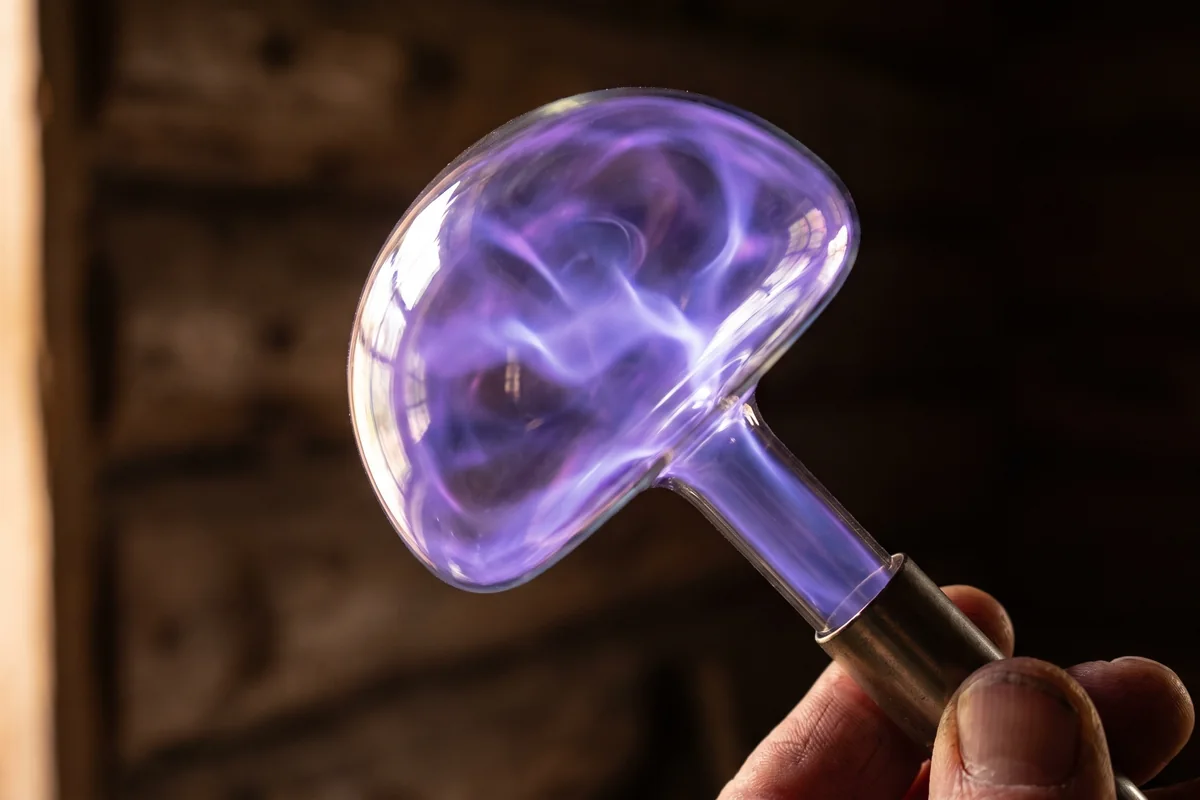
The glow is a gas discharge. When the wand is switched on, it sends a high frequency, high voltage, low current charge into the glass electrode, and the small amount of gas sealed inside lights up. It is the same basic effect that makes a neon sign glow, on a much smaller scale.
A few terms, in plain words:
- Electrode: the glass attachment that slots into the wand’s handle and glides over (or hovers just above) the skin. High frequency electrodes explained covers the common shapes.
- Argon and neon: two noble gases, meaning colorless, stable gases that do not easily react with other substances. Each one gives off its own color of light when energized.
- Argon glow: violet to blue-violet. On some electrodes it looks closer to purple, on others more blue.
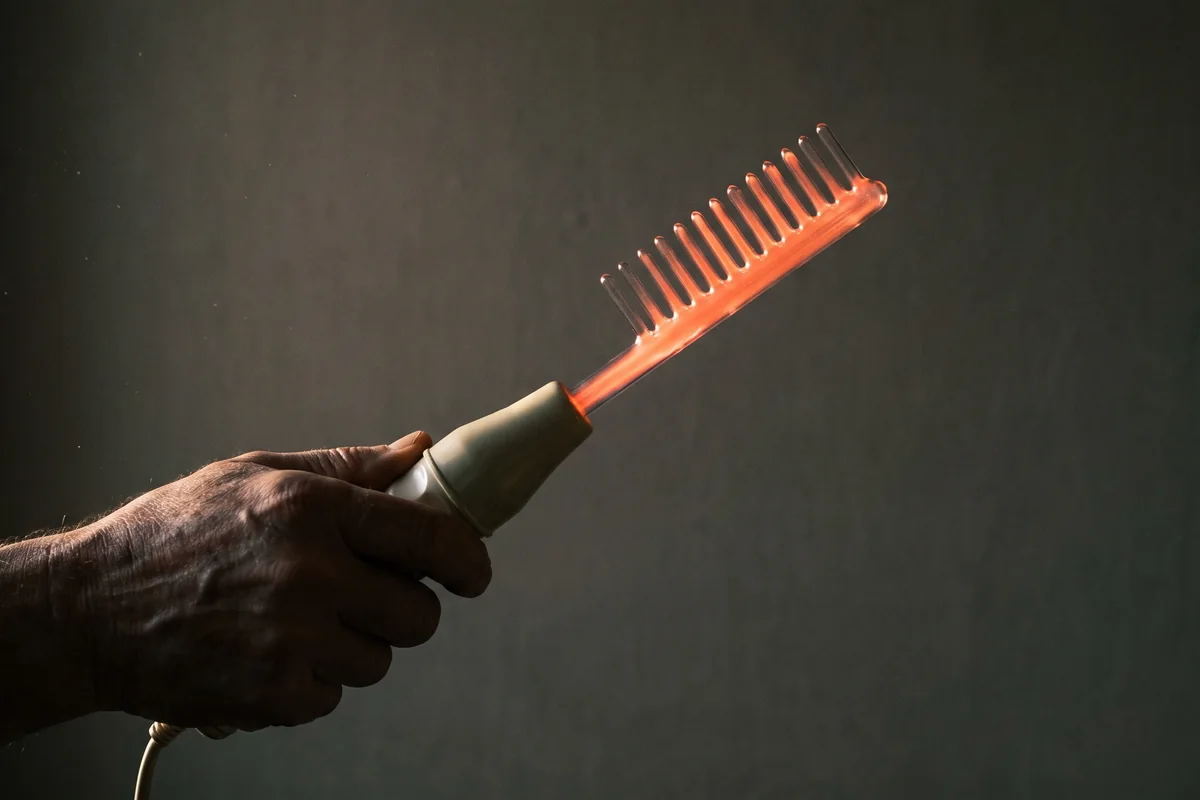
- Neon glow: orange-red, sometimes described as pinkish orange.
The exact shade can vary a little with the glass, the gas pressure inside the tube and the intensity setting. A brighter setting usually makes the glow stronger, not a different color.
Where do the tingling and the ozone smell come from?
The gas stays sealed inside the glass and never touches your skin. The tingle and faint crackle come from the small charge passing from the glass surface to the skin, and the sharp, clean smell many people notice is ozone, which forms when tiny sparks pass through the air at the surface. Because these come from the spark rather than the gas, they happen with argon and neon electrodes alike.
Ozone has antimicrobial properties in lab settings; whether a home wand does this on skin is not well studied. A wand makes only a small amount, but ozone irritates the lungs when inhaled (EPA), so use it in a well-ventilated room, and ask your doctor first if you have asthma or another breathing condition.
One point that causes confusion: the violet glow of an argon electrode is not the same as blue LED light therapy, which uses separate, dedicated LED devices.
What do brands and salons say about argon vs neon?
The common pitch is that violet argon suits oily, congested or breakout-prone skin, while orange neon suits dry, dull or mature skin. These claims come from product listings, brand websites and salon menus, not from published comparisons.
Typical seller descriptions look like this:
- Argon (violet): described with words like purifying or clarifying, often linked to ozone, and usually suggested for oily or breakout-prone skin.
- Neon (orange): described with words like warming or energizing, and usually suggested for dry skin, dull-looking skin and the look of fine lines.
Sellers rarely say where the split comes from or point to a study behind it, and the wording is not always consistent from one listing to the next. Some listings go further and describe deeper changes in the skin; read those as the brand’s marketing, not established findings.
If you are dealing with ongoing breakouts, rosacea or very dry, sensitive skin, an electrode color is not a substitute for advice. See a board-certified dermatologist, who can look at your skin and suggest options that fit it.
What does the evidence actually show?
Very little, on this specific question. Evidence for at-home high frequency in general is limited, and there is little published research comparing argon and neon electrodes for how skin looks. The violet-for-oily, orange-for-dry split is not backed by a head-to-head study that is widely cited in dermatology sources.
Here is how the common claims line up against what is established:
| Claim | Who makes it | What is established |
|---|---|---|
| Argon glows violet and neon glows orange | Everyone | Yes. This is the basic physics of a gas discharge. |
| Argon is better for oily or breakout-prone skin | Brands, sellers, some salons | Not shown in published comparisons |
| Neon is better for dry or mature skin | Brands, sellers, some salons | Not shown in published comparisons |
| Argon makes more ozone than neon | Some sellers | Not well studied. Ozone forms from sparks in the air, which happen with either gas. |
| The gas color itself changes how skin looks | Implied by marketing | Not shown |
What seems to matter more than the color is how the wand is used: the intensity setting, the session length given in the manual, what is on your skin at the time, and whether your skin is a good fit for the device in the first place. Some users say their skin feels refreshed after a session, but any effect is cosmetic and varies from person to person. For what high frequency may and may not help with across specific concerns, read high frequency for skin concerns: what it can and cannot do.
How can you tell which gas your electrodes contain?
The quickest way is to check the manual or product listing, then confirm by looking at the glow color when the wand is on. Violet or blue-violet means argon; orange-red means neon.
- Check the manual, the box or the product listing. Many state the gas type, or describe the electrodes as violet or orange.
- Make sure your hands and the electrode are dry, and fit the electrode as the manual describes.
- Set the intensity to its lowest level.
- Switch the wand on while holding it away from your face and eyes, and note the color. A dim room makes a faint glow easier to see.
- Switch the wand off before setting it down.
Watch for signs that an electrode may be faulty: a glow that flickers or sputters, glows in only part of the tube, or does not appear at all, or glass that is cracked or chipped. If you notice any of these, switch off, unplug the wand before inspecting it, and stop using that electrode. The manufacturer’s support team can tell you whether a replacement is needed. Never use a cracked electrode on skin.
Can you mix argon and neon electrodes on one wand?
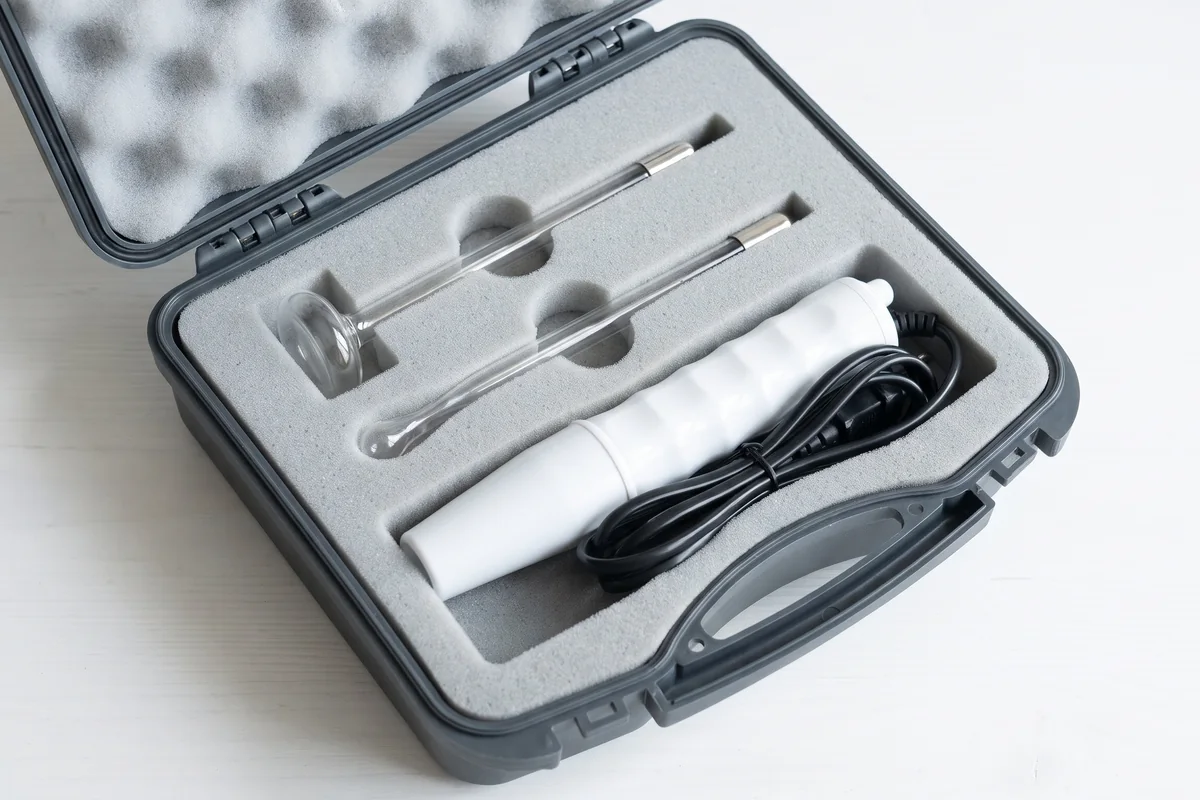
Only if the manual says those electrodes fit that wand. The gas inside does not change how an electrode connects; what matters is whether the metal base matches the handle and whether the manufacturer lists the electrode as compatible. Some wands are sold with both argon and neon electrodes in the same set. What to look for in a high frequency wand covers compatible replacement tubes as part of its buying checklist.
If your manual allows it:
- Switch the wand off and unplug it (or power down a cordless unit) before changing electrodes.
- Let a warm electrode cool before removing it.
- Push the new electrode in gently. If it feels loose, wobbles or will not seat, do not force it and do not use it.
- Avoid electrodes from a different brand unless the manual says they are compatible, since base sizes vary.
- Clean electrodes the way the manual describes, which is usually an alcohol wipe, then let them dry fully before use.
The NuDerma manual, for example, says to power the wand off before removing a tube, to hold the glass close to the handle rather than by the fragile tip, and to use only NuDerma’s official tubes.
Which should a beginner choose?
There is no evidence-based reason to prefer one gas over the other, so the electrode that comes with your wand is a reasonable place to start. Follow the manual for settings and session length (the NuDerma manual limits sessions to a maximum of 5 minutes every other day, partly to preserve the gas inside the glass tubes), begin at the lowest intensity, and pay attention to how your skin responds. A step-by-step walkthrough is in how to use a high frequency wand at home, and what to put on your skin before and after high frequency covers which products to keep away from the wand. Before your first session, read is a high frequency wand safe to use at home? and check who should not use a high frequency wand.
FAQ
Is argon or neon better for acne-prone skin?
Neither has been shown to be better. Violet argon is commonly marketed for oily or breakout-prone skin, but there is little published research comparing argon and neon for how skin looks, so this is a convention rather than a proven difference. For ongoing breakouts, see a board-certified dermatologist.
Why does my electrode glow orange?
An orange-red glow usually means the electrode contains neon. Check the manual or product listing to confirm the gas type.
Is the violet glow the same as blue light therapy?
No. The violet glow of an argon electrode is not the same as blue LED light therapy, which uses separate, dedicated LED devices.
Can I use argon and neon electrodes on the same wand?
Only if the manual says those electrodes fit that wand. Switch off and unplug before changing electrodes, push them in gently, and never force one that does not seat.
Does the ozone smell mean my wand is argon?
No. The smell is ozone, which forms when tiny sparks pass through the air at the surface, so it happens with argon and neon electrodes alike.
This article is for general educational purposes and is not medical advice.